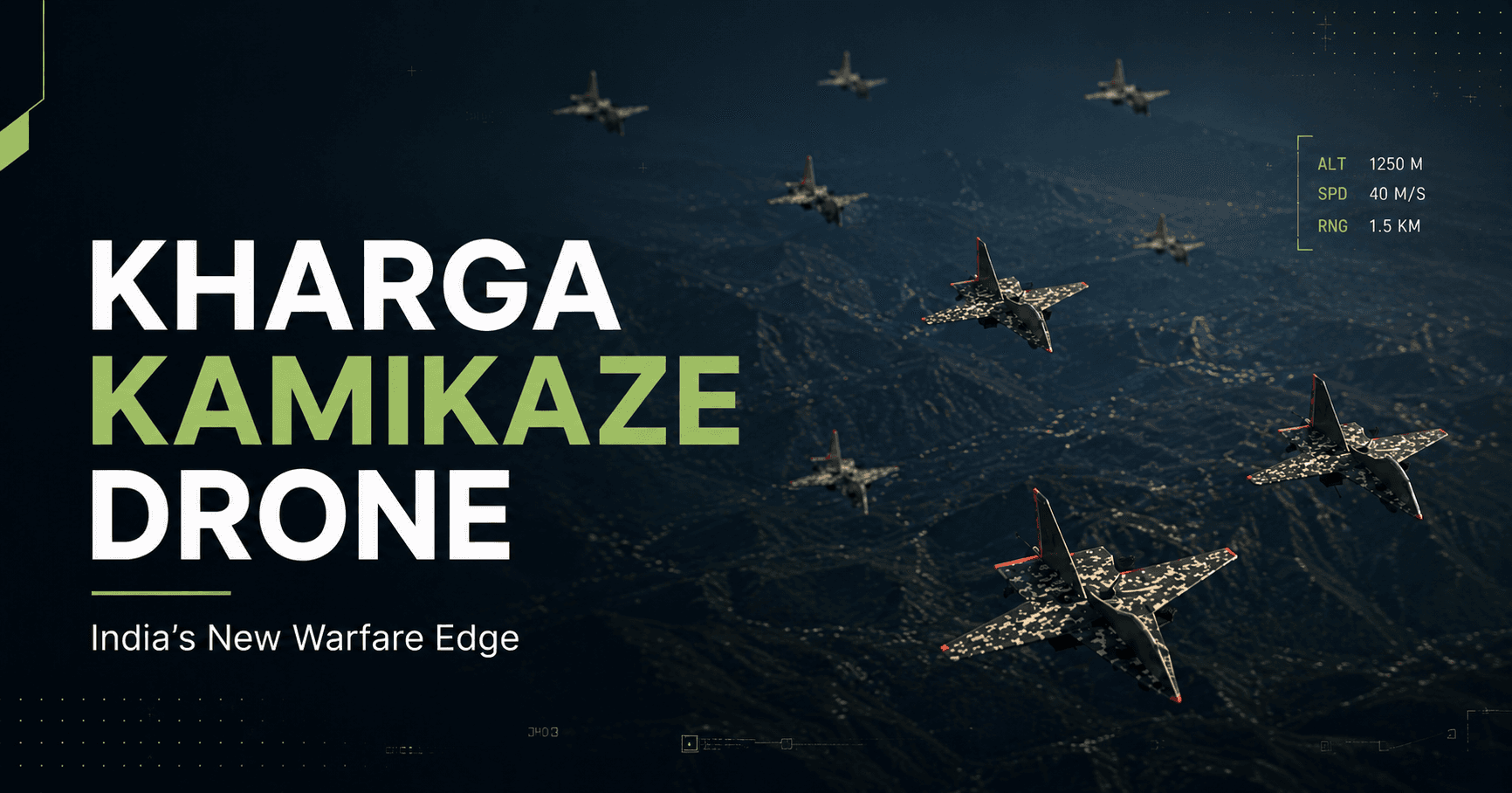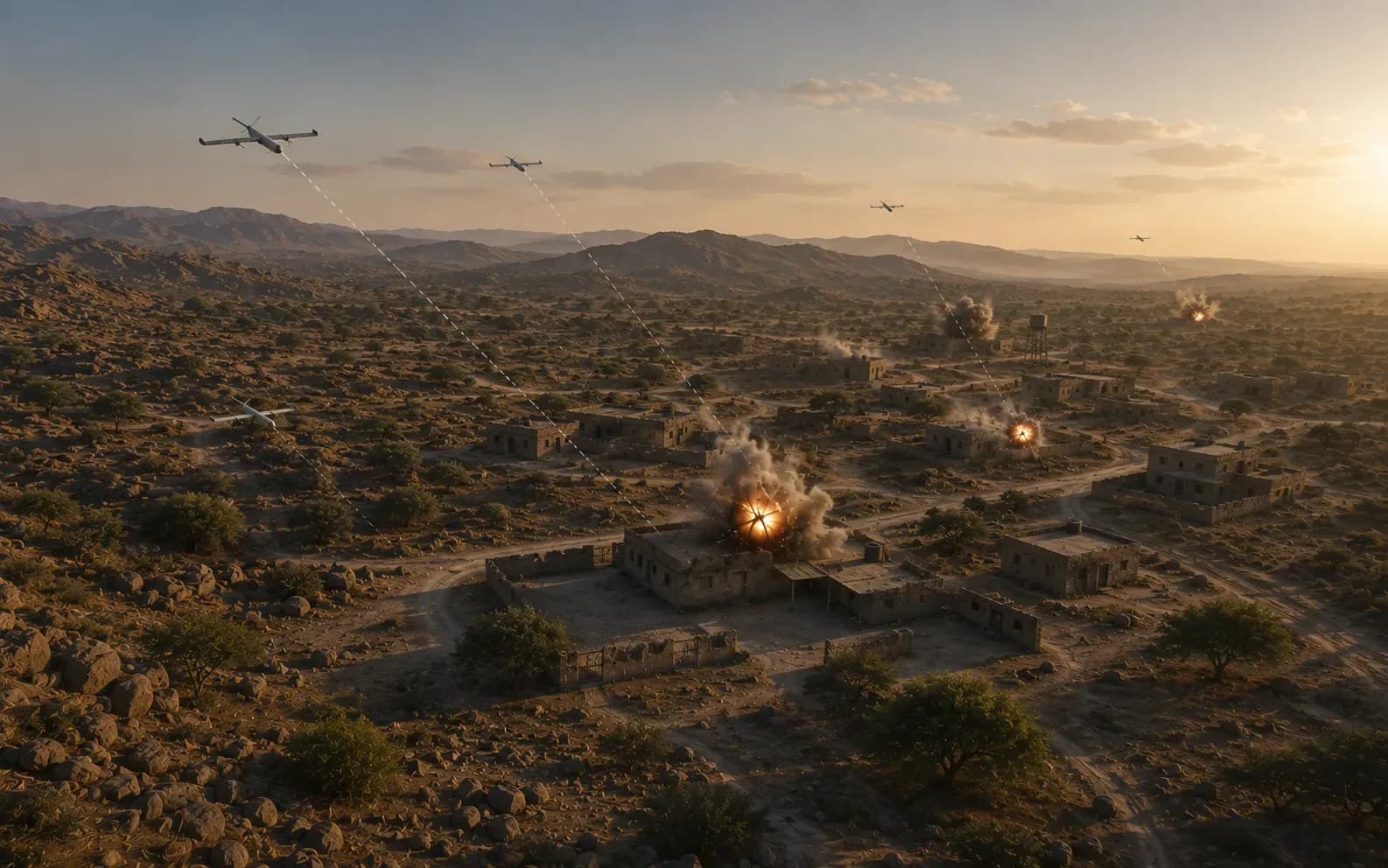
On 8 May 2025, the Indian Army deployed loitering munitions operationally for the first time in Operation Sindoor. The targets were terror camps in Pakistan-occupied Kashmir (Press Information Bureau, 8 May 2025).
In May 2026, the Army inducted two indigenous platforms under EP-6 emergency procurement. The ULPGM is an autonomous loitering munition. The AGNIKAA VTOL-1 is an FPV-controlled kamikaze drone (Ministry of Defence, 11 May 2026).
Both are classified as kamikazes, one-way strike systems, but they operate on different control architectures. This blog separates the terminology, explains the operational distinction, and maps India's doctrine across the autonomy spectrum.
What is a kamikaze drone (or loitering munition)?
A kamikaze drone is a one-way strike platform designed to destroy itself during target engagement. The formal military term is loitering munition. The defining feature is the mission profile, not the control system. The aircraft identifies or receives a target, attacks it directly, and does not return for recovery.
Loitering munitions differ from conventional missiles because they can remain airborne while searching for targets. A missile follows a direct flight path after launch. A loitering munition can orbit, wait, abort, redirect, or re-engage based on mission requirements.
The Indian Army Land Warfare Doctrine 2018 identifies loitering munitions as precision-strike enablers in combined-arms operations (Indian Army Land Warfare Doctrine, 2018). Modern kamikaze drone range and payload specifications vary across two main classes. Lightweight anti-personnel drones carry sub-kilogram payloads at tactical distances. Strategic loitering platforms carry larger warheads over hundreds of kilometres.
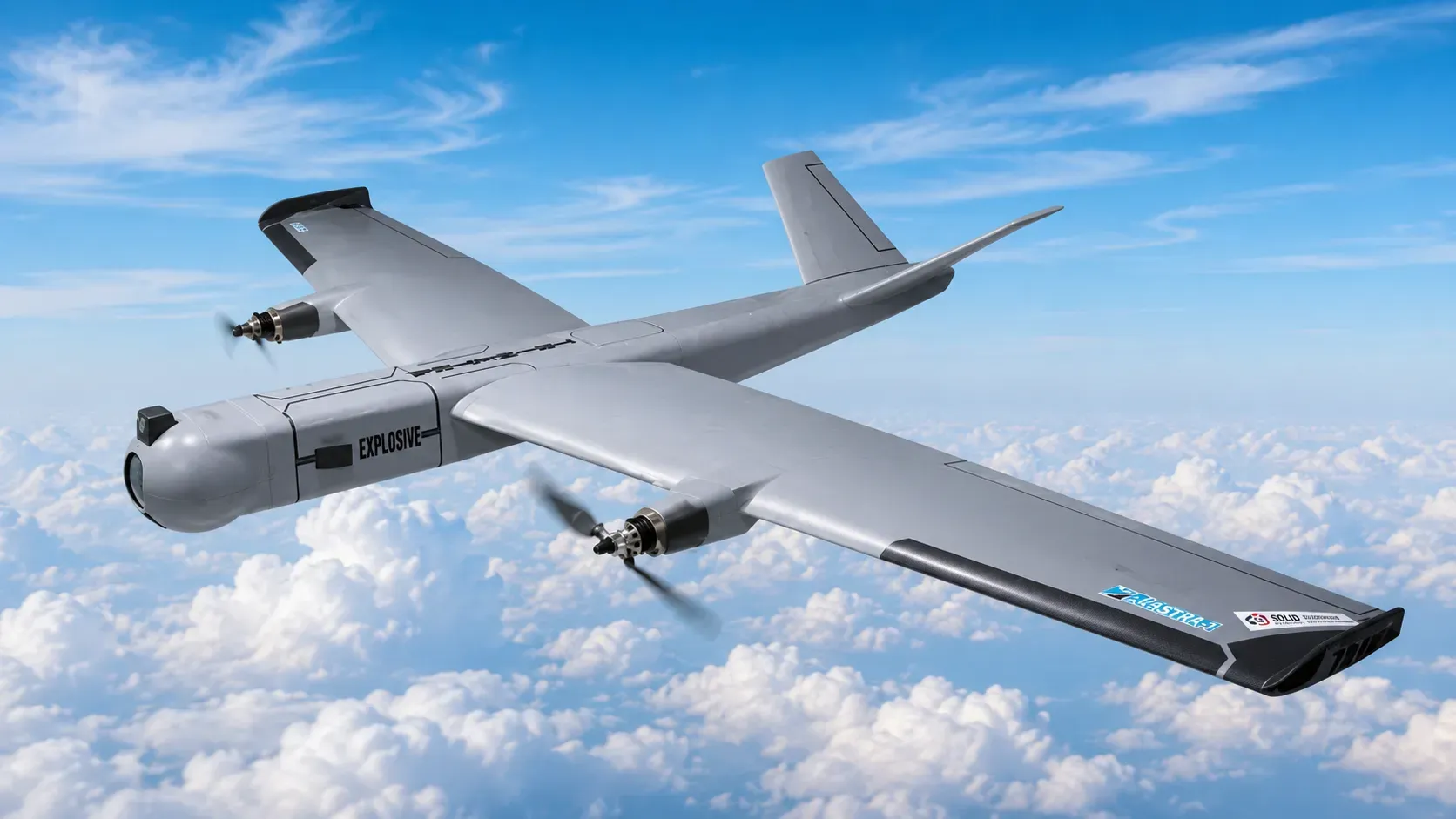
India's indigenous Nagastra-1 system illustrates the autonomous loitering model. The platform carries a 1.5 kg payload and operates at a tactical range of 15 km while transmitting surveillance imagery before engagement (The Hindu, 2025). The operator can redirect or abort the mission during the loiter phase.
Operation Sindoor pushed loitering munitions into mainstream Indian defence discussion because the systems enabled precision strikes without risking pilots inside contested airspace (Press Information Bureau, 8 May 2025). That operational deployment validated years of Indian doctrine development around expendable precision-strike assets.
The term kamikaze originates from Second World War Japanese suicide aircraft missions. Modern loitering munitions are unmanned systems with programmable guidance, automated navigation, and abort functionality. The similarity lies only in the one-way strike mission profile.
What does FPV actually mean in the drone context
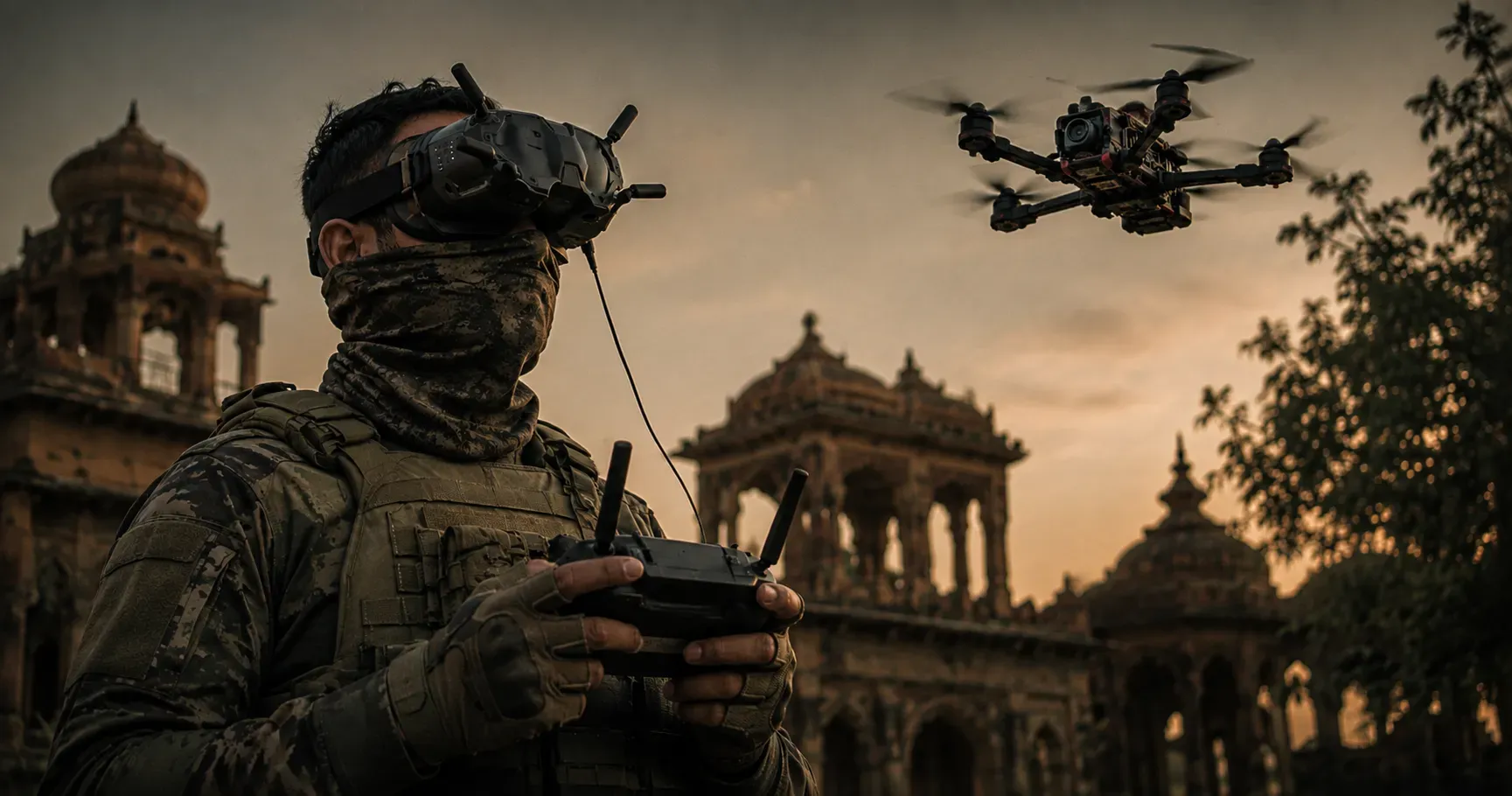
FPV stands for First-Person View. The term describes a control method where the pilot flies the drone through a live video feed transmitted from an onboard camera. The operator typically wears goggles or watches a dedicated monitor showing the aircraft's perspective in real time.
An FPV drone control system depends on continuous communication between aircraft and operator. The pilot manually guides the aircraft throughout the mission. This allows precise manoeuvring against moving targets, confined urban spaces, and changing battlefield conditions.
FPV systems differ fundamentally from waypoint-guided autonomous drones. Autonomous systems follow programmed coordinates or onboard guidance logic after launch. FPV systems require continuous human input during flight.
The AGNIKAA VTOL-1 platform illustrates India's FPV kamikaze doctrine. The system carries anti-personnel payloads and operates at ranges up to 5 km. Endurance reaches 30 minutes and top speed touches 60 kmph (Ministry of Defence, 11 May 2026). The operator guides the platform directly toward the target through real-time video feeds.
FPV architecture can operate through standard radio links or fibre-optic guidance systems. Radio-controlled FPV drones remain vulnerable to jamming and electronic warfare disruption. A fibre optic guided FPV drone reduces jamming risk because communication travels through physical cables rather than radio frequency transmission. This variant has gained traction in contested electromagnetic environments where conventional FPV links fail.
The loitering munition first person view drone concept combines mission role and control method into a single platform. It is a kamikaze (one-way strike) operated through FPV (real-time pilot view). The control method does not determine whether the aircraft is reusable or kamikaze. FPV only defines how the aircraft is flown.
Kamikaze vs FPV: are they the same thing?
The loitering munition vs FPV drone comparison is not a contest between two competing aircraft categories. The terms describe different dimensions of the same system.
Kamikaze describes the mission role. FPV describes the control architecture. A kamikaze drone may operate autonomously, through FPV control, or through hybrid systems combining both methods.
India's indigenous systems demonstrate all three models. Autonomous kamikaze platforms like the ULPGM launch from UAV motherships and use imaging infrared seekers for terminal guidance. The system requires no live pilot and continues operating in GPS-denied environments through anti-spoofing navigation (Ministry of Defence, 11 May 2026).
FPV kamikaze platforms like the AGNIKAA VTOL-1 keep the operator in the loop throughout the strike sequence. They use live visual feeds for precision engagement against moving or partially concealed targets.
Hybrid systems combine both architectures. Operators launch the aircraft autonomously toward a search area. They switch into FPV control during terminal engagement.
This approach reduces pilot workload while preserving real-time targeting flexibility. The Indian Army FPV kamikaze drone AGNIKAA VTOL-1 sits at the FPV end of this spectrum and is purpose-built for forward-unit deployment.
The operational logic behind the distinction is cost and survivability. Loitering munitions allow militaries to conduct precision strikes without risking pilots or expensive reusable aircraft. FPV kamikazes provide tactical flexibility at lower cost than guided missiles. Global conflict analysis has shown that low-cost FPV strike drones can pressure air-defence systems costing millions of dollars to operate.
Operation Sindoor highlighted why militaries deploy multiple kamikaze architectures simultaneously. Strategic targets require autonomous loitering endurance and anti-jamming resilience. Tactical battlefield targets benefit from FPV precision and human-controlled terminal engagement. The two systems answer different operational problems.
India's indigenous FPV and loitering-munition platforms
India's indigenous drone ecosystem now includes FPV kamikaze systems, autonomous loitering munitions, and hybrid strike architectures operating under separate tactical doctrines. The procurement signal points toward parallel investment across the autonomy spectrum rather than convergence on a single platform type.
AGNIKAA VTOL-1 entered Indian Army service in May 2026 under EP-6 emergency procurement for Western Command deployment (Ministry of Defence, 11 May 2026). The platform uses a three-layer trigger mechanism and a four-layer safety architecture for controlled terminal engagement. It also operates inside GPS-denied environments with electronic warfare resilience.
The system has a lethality radius of 5 metres against personnel and light vehicles. Range, endurance, and speed numbers position the India AGNIKAA VTOL FPV drone for urban warfare, confined-space operations, and anti-personnel missions at the squad and platoon level.
ULPGM functions differently. The munition launches from UAV platforms rather than direct operator control. The system carries a 2 kg warhead and uses imaging infrared seekers for terminal guidance while maintaining functionality inside communication-jammed environments (Business Standard, May 2026).
The UAV operating range extends to 20 km, with the munition itself striking at 2.5 km from release. Circular Error Probable sits at 1 metre, which places ULPGM in the precision-strike category against both soft and hard targets.
Nagastra-1 occupies the tactical autonomous loitering category. The platform combines loitering capability with real-time surveillance feeds and precision-strike functions at battlefield scale. The system became one of India's earliest publicly discussed indigenous loitering munitions after tactical trials and procurement activity during 2025 (The Hindu, 2025). It carries a 1.5 kg payload and operates at 15 km range.
These three systems are not interchangeable. They exist in parallel because India's doctrine now separates tactical FPV precision strike from strategic autonomous loitering engagement.
How India's military doctrine uses both systems
India's precision-strike doctrine uses autonomous loitering munitions and FPV kamikaze systems together rather than as replacements for one another. The doctrine treats them as complementary capabilities serving different operational needs.
Autonomous loitering munition GPS waypoints define the strategic strike layer. These systems support deep-strike missions, suppression of enemy air defence, infrastructure targeting, and distributed saturation attacks. They operate with reduced communication dependency and survive better inside contested electronic warfare environments. The Indian Army Land Warfare Doctrine 2018 identifies precision-strike systems as force multipliers inside combined-arms battle groups (Indian Army Land Warfare Doctrine, 2018).
FPV kamikaze systems operate closer to frontline tactical units. Operators guide the aircraft directly against personnel positions, vehicles, urban strongpoints, and fleeting targets. The real-time control loop improves target discrimination and reduces collateral damage risk during close engagements. FPV drone real-time targeting precision strike capability has become a signature of forward-unit drone doctrine across modern battlefields.
Operation Sindoor demonstrated the strategic role of loitering munitions within a coordinated strike architecture (Press Information Bureau, 8 May 2025). FPV systems address different operational needs. Urban warfare, trench engagement, and rapid-response battlefield strikes require human-controlled terminal guidance.
The cost logic reinforces the doctrinal split. Loitering munitions allow militaries to mount precision strikes without risking pilots or expensive reusable aircraft. FPV kamikazes provide tactical flexibility at lower cost than guided missiles.
A single advanced air-defence system can cost tens of millions of dollars to build. The same budget covers thousands of low-cost FPV strike drones, which explains why both Russia and Ukraine now produce FPV systems at industrial scale.
Electronic warfare shapes the distinction further. FPV drones remain more vulnerable to signal jamming because they depend on active communication links. Autonomous loitering systems use onboard navigation logic and anti-jamming guidance to continue operating after launch.
Fibre-optic FPV variants offer a middle ground. They preserve real-time pilot control while removing the radio-frequency vulnerability that lets adversary EW units defeat conventional FPV links.
Counter-UAS doctrine now stacks four defensive layers. The first layer is electronic warfare, which jams or spoofs the drone's command link. The second layer is kinetic intercept through missiles, anti-aircraft guns, and close-in weapon systems.
The third layer is interceptor drones tasked to engage incoming threats. The fourth layer is sensor fusion that links radar, optical, and signals intelligence for early detection.
India's doctrine now spans a layered architecture. Autonomous loitering systems handle strategic strike and contested airspace. FPV strike systems handle tactical precision engagement.
ISR drones provide surveillance and targeting support. Counter-UAS systems deliver electronic and kinetic interception.
Civil FPV drones and military FPV kamikazes: two separate worlds
Civilian FPV drones and military FPV kamikazes share the same control architecture but operate under completely separate regulatory systems. The technology overlap exists at the control-interface level only.
Civilian FPV operations in India fall under DGCA Drone Rules 2021, the Digital Sky Platform, Remote Pilot Licence requirements, and airspace restrictions (DGCA Drone Rules, 25 August 2021).. Hobby FPV drones, racing systems, and commercial aerial platforms require registration depending on aircraft weight classification. A 5-inch FPV racing build typically weighs 500 to 700 grams with battery and falls in the Micro category. Larger builds push into the Small category and trigger additional compliance requirements.
Military FPV systems operate outside DGCA civilian regulation. They fall under Ministry of Defence procurement and operational doctrine. AGNIKAA VTOL-1 and similar platforms follow military testing, electronic warfare certification, and battlefield deployment standards rather than civilian aviation compliance. Warhead integration, EW hardening, and precision-strike testing follow military standards, not DGCA certifications.
This distinction matters because the same term, FPV, appears in both civilian hobby discussions and defence procurement announcements. Civil FPV focuses on racing, aerial imaging, and commercial operations. Military FPV focuses on precision strike, survivability, and battlefield integration. The two domains use identical control technology and incompatible regulatory frameworks.
India's drone ecosystem now spans both worlds simultaneously. Civilian FPV aviation falls under DGCA regulation. Military FPV strike systems fall under the Ministry of Defence.
India's next doctrinal inflection lies in swarm coordination. Multiple kamikaze platforms, whether autonomous, FPV, or hybrid, will operate together inside integrated battlefield networks. The Defence Research and Development Organisation and the Indian Army are investing in swarm architecture research now. Formal doctrine statements on multi-platform coordination are expected to follow as the indigenous capability matures.