Defense, decoded.
Independent reporting and strategic analysis on the systems and decisions that shape modern defense — written for operators, policymakers, and the analysts who advise them.
Latest in Drones
View all in Drones →
Civil Drone (Promotion and Regulation) Bill 2025: what it changes for operators

Counter-drone systems in India: the defence stack
Counter-drone systems in India now run on a six-layer defence stack of sensors, AI fusion, command, soft-kill, hard-kill, and directed-energy weapons. This is the architecture that intercepted more than six hundred hostile drones during Operation Sindoor in May 2025.

How to fly a drone in India: pre-flight to landing
How to fly a drone in India is now defined by a structured operational sequence, not just stick control. Registration, airspace checks, pre-flight inspection, in-flight discipline, and post-flight logging each sit inside the Drone Rules 2021 framework. This walkthrough follows the operator flow used across commercial, survey, and agricultural drone operations in Indian airspace.
Latest in Automation
View all in Automation →
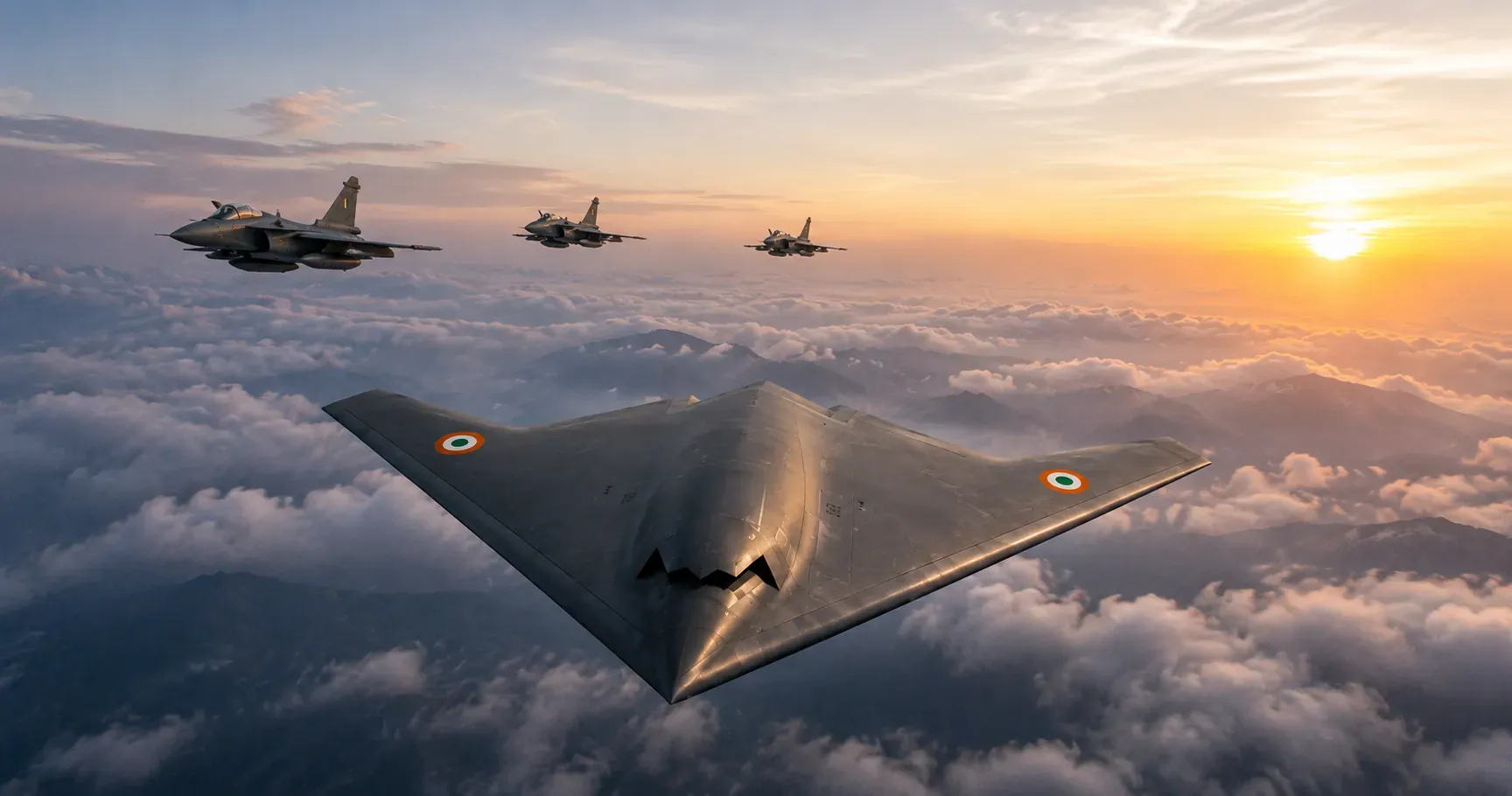
Manned-unmanned teaming: doctrine and Indian programmes

Drone swarms and how swarm intelligence actually works in modern warfare
Drone swarms turned single-platform unmanned warfare into collective decision-making at machine speed. This piece walks the swarm intelligence stack, the algorithms behind it, the architecture classes, and the indigenous Indian programmes heading into the sovereign swarm RFP.

AI in drones: how artificial intelligence makes UAVs autonomous
AI in drones has shifted unmanned aerial vehicles from remotely piloted machines to autonomous platforms that perceive, decide, and act with limited human input. This is the analytical reference on the autonomy stack, the Indian programme map, and the doctrine shift now driving India's drone-centric force structure.
Strategic intelligence, delivered.
Curated analysis from the Kodainya newsroom. Every Sunday, the briefings that defense leaders read first.
Browse all analysis
Manned-unmanned teaming: doctrine and Indian programmes
Manned-unmanned teaming is the doctrine where a piloted aircraft commands a formation of unmanned platforms that scout, jam, decoy, relay sensor feeds, or strike. India is now building four loyal-wingman tracks across the Indian Air Force, Indian Army, and Indian Navy under a single tri-service MUM-T framework.
Automation
Civil Drone (Promotion and Regulation) Bill 2025: what it changes for operators
The Civil Drone Bill 2025 proposes to replace Drone Rules 2021 with a standalone statute below 500 kg. Released by the Ministry of Civil Aviation on 16 September 2025, the draft Bill rewrites type certification, insurance, BVLOS, penalties, and compensation. Here is what changes for Indian operators, manufacturers, and procurement teams.
Drones
Drone swarms and how swarm intelligence actually works in modern warfare
Drone swarms turned single-platform unmanned warfare into collective decision-making at machine speed. This piece walks the swarm intelligence stack, the algorithms behind it, the architecture classes, and the indigenous Indian programmes heading into the sovereign swarm RFP.
Automation
AI in drones: how artificial intelligence makes UAVs autonomous
AI in drones has shifted unmanned aerial vehicles from remotely piloted machines to autonomous platforms that perceive, decide, and act with limited human input. This is the analytical reference on the autonomy stack, the Indian programme map, and the doctrine shift now driving India's drone-centric force structure.
Automation
Counter-drone systems in India: the defence stack
Counter-drone systems in India now run on a six-layer defence stack of sensors, AI fusion, command, soft-kill, hard-kill, and directed-energy weapons. This is the architecture that intercepted more than six hundred hostile drones during Operation Sindoor in May 2025.
Drones
AI and autonomous drones: how unmanned systems think and act
AI and autonomous drones now operate at a level where onboard intelligence replaces the human operator in routine mission tasks. This article walks the perception, decision, and action loop and the five drone autonomy levels. It closes on where India's indigenous autonomy stack stands today.
Automation
How to fly a drone in India: pre-flight to landing
How to fly a drone in India is now defined by a structured operational sequence, not just stick control. Registration, airspace checks, pre-flight inspection, in-flight discipline, and post-flight logging each sit inside the Drone Rules 2021 framework. This walkthrough follows the operator flow used across commercial, survey, and agricultural drone operations in Indian airspace.
Drones
What a drone UIN actually is, and what it does not authorise in India
A drone UIN is the permanent legal identity of an unmanned aircraft system under Drone Rules 2021. It is not flight permission, not a pilot licence, and not airspace clearance. This reference explains what the UIN authorises under Rule 15, what it does not, and where it sits inside the eGCA and DigitalSky compliance chain.
Drones
Defence drones in India: indigenous fleet, doctrine, and the post-Sindoor build-out
Defence drones in India have moved from auxiliary ISR assets to decisive battlefield platforms in the year since Operation Sindoor. This is the reference page on India's indigenous military drone fleet, the platforms in service, the programmes in development, the doctrine driving procurement, and the institutions building the force.
Drones
Drone-as-a-service in India: the business model behind the drone economy
Drone-as-a-service in India has become the operating model behind commercial unmanned aviation across agriculture, logistics, infrastructure, and healthcare. Instead of buying aircraft fleets outright, operators and government departments now procure drone capability through pay-per-use, subscription, and outcome-linked contracts tied to measurable field performance.
Drones
What the Kisan Drone Scheme is and how it sits inside SMAM
The Kisan Drone Scheme is the Government of India's flagship subsidy framework for agricultural drone adoption under the Sub-Mission on Agricultural Mechanisation (SMAM). It funds farmers, Farmer Producer Organisations, Custom Hiring Centres and agricultural institutions through four subsidy tiers tied to DGCA-compliant agricultural drone procurement and Direct Benefit Transfer workflows.
Drones
Wireless Planning and Coordination (WPC) ETA for drones in India: the Wireless Planning Wing process
WPC ETA for drones in India is the wireless approval that civilian unmanned aircraft must clear before DGCA Type Certification, DGFT import authorisation, or eGCA registration will progress. Drones are excluded from the self-declaration shortcut and route through Regional Licensing Offices of the WPC Wing on the Saral Sanchar portal.
Drones
Drone import rules in India: why DJI is effectively banned
Drone import rules in India have made foreign consumer-drone imports functionally impossible since 9 February 2022. The CBU, SKD, and CKD prohibition leaves four legal pathways for Indian buyers: grandfathered pre-ban fleet, R&D exemption, indigenous procurement, and drone-as-a-service. This article explains the regulatory architecture and the enforcement shift that followed.
Drones
Who regulates drones in India: DGCA, MoCA, and the wider stack
Who regulates drones in India is no longer a one-agency answer. The Directorate General of Civil Aviation issues certificates. The Ministry of Civil Aviation owns policy. The Bharatiya Vayuyan Adhiniyam 2024 carries the statute. Six more authorities sit alongside, each controlling a different layer of every legal flight.
Drones
GeM portal for drone procurement: how India buys drones through GeM
GeM portal for drone procurement is now the mandatory procurement route for ministries, public sector units, AIIMS institutions, and state departments buying drones or drone-as-a-service in India. Rule 149 of the General Financial Rules framework converted GeM from a marketplace into a legally binding procurement gateway for unmanned systems, payloads, and drone operations.
Drones
Drone delivery in India: corridors, commercial economics, and the policy roadmap
Drone delivery in India has moved from sandbox trials into a regulated, corridor-bound logistics layer. India crossed two million cumulative drone deliveries by end-2025, six BVLOS corridors are operational, and the Civil Drone Bill released on 16 September 2025 has shifted focus toward nationwide compliance architecture and commercial scale.
Drones
Anti-drone systems in India: how they detect rogue UAVs
Anti-drone systems in India now combine radar, radio-frequency sensing, electro-optical imaging, and acoustic detection inside an AI-driven command layer. This explainer walks the detect-track-classify-mitigate chain, the indigenous platforms validated during Operation Sindoor, and what the sensor stack catches before a rogue UAV reaches a protected site.
Drones
How to register a drone on Digital Sky: the eGCA UIN walkthrough
Drone registration on Digital Sky now runs through the eGCA portal after the DGCA migrated core drone services in July 2025. The updated workflow uses Form D-2 for UIN issuance and BharatKosh for payments. This walkthrough covers the documents, the seven on-portal steps, BharatKosh failure modes, rejection reasons, and how UIN connects to NPNT flight permissions in India.
Drones
Namo Drone Didi Yojana: how India's women-led drone scheme works
Namo Drone Didi Yojana is India's central sector scheme to place 14,500 agricultural drones with women-led self-help groups by 2025-26. This guide maps the ₹1,261 crore allocation, the 80 per cent subsidy stack, the 15-day RPC training pathway, the state rollout, and the realistic per-acre income math.
Drones
Drones in agriculture in India: the operator's regulation and economics guide
Drones in agriculture are now the single largest application segment of the Indian unmanned aircraft market. This guide explains how Kisan Drone subsidies, the Drone Rules 2021 weight classes and Type Certification combine. It maps the operator playbook for spraying, scouting and precision-farming across Indian farms.
Drones