The Indian Armed Forces operate a mixed unmanned fleet across the Army, Navy, and Air Force. Defence press estimates place total inventory between 2,000 and 2,500 platforms by mid-2024. Operation Sindoor in May 2025 reshaped the procurement cycle. The Defence Acquisition Council cleared proposals worth ₹67,000 crore on 5 August 2025, including Medium Altitude Long Endurance Remotely Piloted Aircraft for all three services (Press Information Bureau, 5 August 2025). That cycle was followed by additional clearances for combat unmanned aerial vehicles, swarm loitering munitions, and emergency tactical procurement through April 2026. This page covers the classification framework, the platforms by service, the indigenous programmes, the post-Sindoor doctrine, and the institutions behind the build-out.
Why India's defence drone fleet matters in 2026
Indian defence drones sit at the intersection of three forces. The Ukraine and Russia conflict turned every drone class from quadcopter to long range loitering munition into a doctrine input, reshaping traditional air power calculations across every major military. Operation Sindoor in May 2025 produced South Asia's first non-contact, drone led tri-service operation. The Ministry of Defence framed Operation Sindoor as a milestone in technological self-reliance, with indigenous drone warfare, layered air defence, and electronic warfare integrated into national defence (Press Information Bureau, 14 May 2025).
India's historical position in unmanned aviation was that of an importer. Stockholm International Peace Research Institute data placed India as the world's largest UAV importer between 1985 and 2014. India accounted for a 22.5 per cent share of global UAV imports over that period, almost all sourced from Israel (SIPRI Yearbook, 2015). The post 2021 procurement direction inverted that posture. The Ministry of Civil Aviation banned imports of foreign drones in August 2021. The notification opened the door to Made in India drone manufacturing outside a narrow research, defence, and security carve-out. The notification anchored the indigenous direction for civilian and most defence procurement (Ministry of Civil Aviation, August 2021 import policy, amended 9 February 2022).
The exports figure has moved in parallel. Indian defence exports reached ₹23,622 crore in FY 2024 to 2025, a 34 fold rise since FY 2013 to 2014. Unmanned systems sit among the priority export categories under the Defence Production and Export Promotion Policy framework (Press Information Bureau, 2 April 2025). India's domestic military drone market is sized between USD 597 million in 2025 and USD 1,917 million by 2034 in private market research. The base case compound annual growth rate sits around 13.8 per cent (IMARC Group, India Military Drone Market Report, January 2026).
How India classifies military drones
The Indian Armed Forces classify unmanned systems against the NATO weight and endurance grid, with three broad operational classes. Class I covers platforms under 150 kg, used for tactical surveillance and short range reconnaissance. Class II covers 150 to 600 kg systems, used for medium altitude ISR UAV missions and tactical strike support. Class III covers platforms over 600 kg, used for Medium Altitude Long Endurance and High Altitude Long Endurance missions. The Indian doctrinal distinction separates MALE platforms from HALE platforms by service ceiling. MALE systems operate at 25,000 to 30,000 feet. HALE platforms operate above 50,000 feet.
The Indian Armed Forces also distinguish unmanned systems by mission profile rather than weight alone. Intelligence, Surveillance, and Reconnaissance platforms carry electro optical and infrared payloads, synthetic aperture radar, or signals intelligence packages. Unmanned Combat Aerial Vehicles, often called UCAVs, carry guided munitions for strike missions. Loitering munitions, sometimes called suicide drones or kamikaze drones, combine ISR loiter with terminal strike capability inside a single airframe. Target drones replicate adversary aircraft signatures for live fire training.
Defence drones in India sit outside the civilian DGCA Nano, Micro, Small, Medium, and Large category framework defined under the Drone Rules 2021. Military procurement runs through the Ministry of Defence under the Defence Acquisition Procedure 2020, with airworthiness assessed by the Centre for Military Airworthiness and Certification rather than DGCA. The parallel track architecture means a civilian operator and a defence operator working at the same altitude band rely on entirely separate registration, certification, and airspace authorisation systems.
Class I covers tactical platforms under 150 kg with service ceilings up to 15,000 ft, which is where Indian Army tactical ISR quadcopters and infantry launched platforms sit. Class II covers 150 to 600 kg systems with service ceilings up to 25,000 ft, populated by the Searcher Mark II and smaller Heron variants. Class III MALE covers platforms over 600 kg operating between 25,000 and 30,000 ft, where the Heron Mark I, Heron Mark II, and the indigenous TAPAS BH sit. Class III HALE covers platforms over 600 kg operating above 50,000 ft. This band is where the leased MQ-9B SeaGuardian operates today and where future indigenous HALE programmes are designed to sit.
The complete Indian defence drone fleet at a glance
Before the deep dives into programme families, the table below sets out every platform in service, in trials, and in the procurement pipeline across the Indian defence drone inventory. Origin denotes the country of design or the technology transfer partner. Status reflects the position as of April 2026, drawing on Press Information Bureau releases, Ministry of Defence briefs, and DRDO Aeronautical Development Establishment specifications cited in the sections that follow.
Platform | Class | Role | Range | Endurance | Service | Origin | Status |
|---|---|---|---|---|---|---|---|
Heron Mk I | MALE | ISR | 350 km LoS | 40 hr | Army, IAF | Israel | Active |
Heron Mk II | MALE | ISR | 1,000 km SATCOM | 45 hr | Army, IAF | Israel | Active |
Searcher Mk II | Class II | Tactical ISR | 250 km LoS | 18 hr | Army | Israel | Active |
TAPAS BH | MALE | ISR | 250 km LoS | 18 to 24 hr | Tri-service | India | Trials |
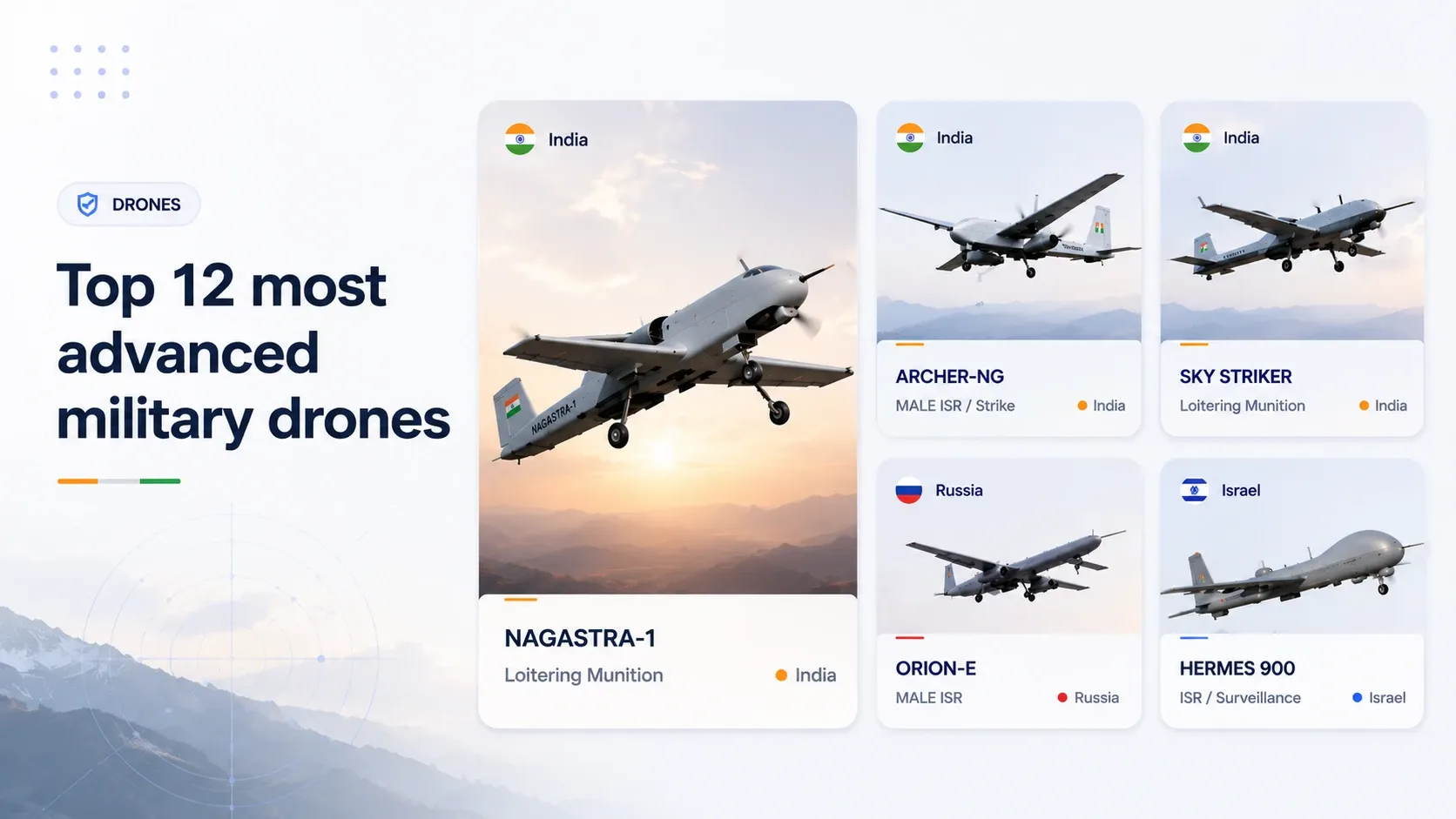
Archer NG | MALE UCAV | ISR, strike | 300 km | 18 hr | IAF | India | Development |
Ghatak | Stealth UCAV | Deep strike | Over 1,000 km | 5 to 8 hr | IAF | India | Development |
MQ-9B SeaGuardian | HALE | Maritime ISR | 1,850 km SATCOM | 40 hr | Navy | USA | Leased |
MQ-9B (31 units) | HALE | ISR, strike | 1,850 km SATCOM | 40 hr | Tri-service | USA | Ordered |
CATS Warrior | Loyal wingman | Strike, EW | 700 km | 4 hr | IAF | India | Development |
Nagastra 1 | Loitering | Tactical strike | 30 km | 60 min | Army | India | Active |
SkyStriker | Loitering | Precision strike | 100 km | 2 hr | IAF, Army | Israel, India | Active |
Sheshnaag 150 | Loitering | Deep strike | Over 1,000 km | 5 hr | Army | India | Development |
Sheshnaag 20 | Loitering swarm | Tactical strike | 50 km | 1 hr | Army | India | Development |
Advanced Loitering System | Loitering | Precision strike | Over 250 km | Not disclosed | Army | India | Active |
Harop | Loitering | SEAD | 1,000 km | 9 hr | IAF | Israel | Active |
The classification band anchoring this table maps to the MALE, HALE, and HAPS altitude framework used across the Indian Armed Forces. Loitering munitions sit outside the endurance grid and are covered separately in India's loitering munition programme.
The ISR backbone across Heron, Searcher, and TAPAS
India's surveillance fleet rests on three platform families. The Heron drone family, comprising Heron Mark I and Heron Mark II from Israel Aerospace Industries, has anchored Indian MALE ISR operations since 2002.
Units are deployed across Tezpur, Bagdogra, Chabua, Kumbhirgram, and forward bases in Ladakh. A 2021 lease arrangement added four Heron platforms with Automatic Taxi, Take Off, and Landing systems and long range surveillance cameras for high altitude border surveillance (Ministry of Defence press notes on the Heron TP lease, 2021). The Searcher Mark II from the same supplier sits one rung below, providing medium altitude tactical ISR.
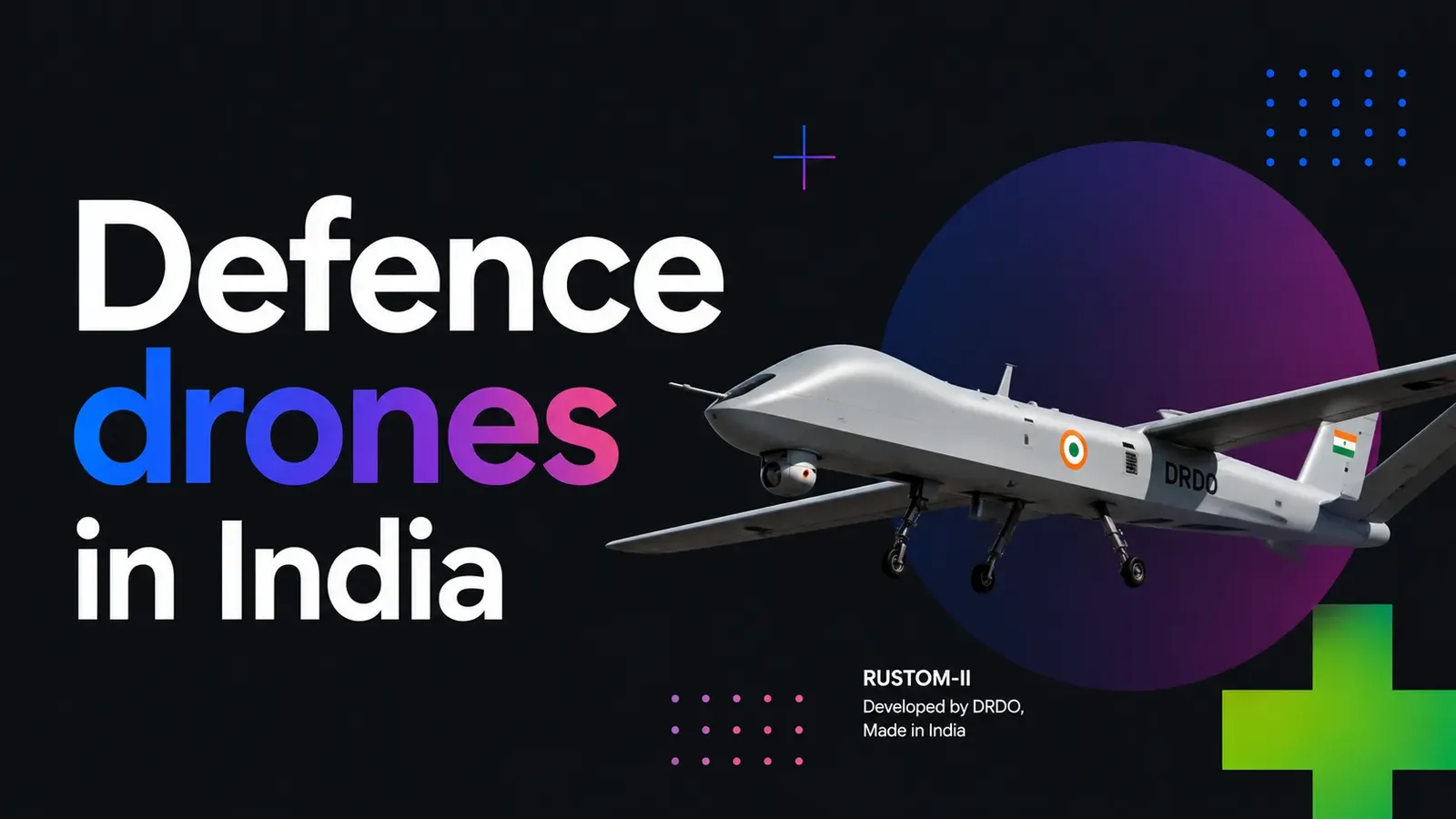
The indigenous backbone is TAPAS BH, the Tactical Aerial Platform for Advanced Surveillance Beyond Horizon developed by DRDO's Aeronautical Development Establishment in Bengaluru. Formerly designated Rustom II, TAPAS BH is a MALE drone platform. Its target service ceiling sits at 28,000 to 30,000 feet, with an endurance band of 18 to 24 hours. The platform completed multiple development flight trials between 2022 and 2024. The Ministry of Defence has identified TAPAS as integral to India's long term defence strategy alongside the imported MALE drone procurement (Press Information Bureau, 5 August 2025).
The 5 August 2025 Defence Acquisition Council clearance accepted the procurement of Medium Altitude Long Endurance Remotely Piloted Aircraft for all three services. The order falls under the Buy Indian IDDM category. The broader DAC package was valued at ₹67,000 crore (Press Information Bureau, 5 August 2025). Defence press reporting placed the MALE tranche at 87 platforms split between two domestic manufacturing lines under a ₹30,000 crore allocation. Delivery is expected to outpace the 31 MQ-9B Predator drones contracted from the United States in October 2024. The MQ-9B order remains on a 2029 to 2030 induction schedule and the indigenous tranche is designed to fill the capability gap in the interim.
The Tango Charlie UAV, unveiled for high altitude border surveillance and operational testing, sits in the same persistent ISR mission band. The Indian Air Force drone requirement extended in April 2026. The service issued a Request for Information for a hydrogen powered Medium Altitude Heavy Lift Airship designed for ISR missions. The brief widens the persistent surveillance category beyond fixed wing UAVs.
The armed UCAV roadmap covering Archer NG, Ghatak, and CATS Warrior
The strike fleet runs along three indigenous tracks. Archer NG is the DRDO armed MALE platform derived from the Rustom I airframe, with planned integration of laser guided rockets, bombs, and loitering munitions. The Ministry of Defence has positioned Archer NG and TAPAS BH as complementary to the imported MALE drone procurement. Both platforms run under a unified Ground Control Station developed by DRDO's Aeronautical Development Establishment.
The Ghatak Unmanned Combat Aerial Vehicle is the headline indigenous combat programme. Ghatak is a 13 tonne flying wing stealth UCAV with an internal weapons bay. The airframe is designed for deep strike, suppression of enemy air defences, and manned and unmanned teaming with Tejas Mk2 and AMCA. The platform draws on a non afterburning derivative of the Kaveri engine developed by Gas Turbine Research Establishment with a target dry thrust around 49 kN. Aeronautical Development Establishment briefs place Ghatak's combat radius beyond 1,000 km with five to eight hour endurance and an internal weapons bay payload of approximately 1,500 kg. India's Defence Procurement Board recommended the acquisition of 60 Ghatak units on 3 March 2026, with the proposal moving to the Defence Acquisition Council for approval (Business Standard, reporting Defence Procurement Board recommendation, 3 March 2026).
The Combat Air Teaming System Warrior, a Hindustan Aeronautics Limited loyal wingman concept, sits in the third strike track. CATS Warrior is designed to operate alongside crewed fighters in a quarterback and wingman pairing, with the manned platform directing one or more unmanned aircraft into contested airspace. The architecture maps to manned and unmanned teaming doctrine that the Indian Air Force has identified as central to its 2030s combat planning.
The 31 MQ-9B High Altitude Long Endurance Remotely Piloted Aircraft Systems agreement with the United States was signed in October 2024. The tri-service procurement is worth approximately USD 3.5 billion (Ministry of Defence release, October 2024). Two MQ-9B SeaGuardian platforms have been on lease with the Indian Navy since 2020 for maritime ISR over the Indian Ocean Region. The indigenous Archer NG and Ghatak programmes are not displaced by the MQ-9B deal. They sit alongside it inside India's layered strike doctrine.
Loitering munitions and the indigenous suicide drone stack
Loitering munitions and kamikaze drones form the fastest expanding category in Indian defence drone procurement after Operation Sindoor. The Indian Armed Forces deployed Harop loitering munitions from Israel Aerospace Industries against air defence radar sites during Sindoor strike packages on 7 and 8 May 2025 (Press Information Bureau, Operation Sindoor briefing, 14 May 2025). The Ministry of Defence subsequently identified loitering munitions as a priority capability for indigenous scale up.
The indigenous stack now covers four named platforms. Nagastra 1 is the man portable loitering munition cleared for Indian Army induction. The Sheshnaag 150, developed by Bengaluru based NewSpace Research and Technologies, is a long range collaborative loitering munition. Public brief specifications place its range above 1,000 km with five hour endurance and a 25 to 40 kg warhead class. The platform was unveiled at the World Defence Show in Riyadh in February 2026 and tested over a 720 km flight profile at Pokhran shortly after (Army Recognition, World Defence Show 2026 reporting, 11 February 2026). Sheshnaag 20 is the canister launched swarming variant in the same family. The Advanced Loitering System, with a reported range over 250 km, was designed for forward landing grounds above 10,000 feet for deployment along the Ladakh sector.
The Indian Air Force inducted the SkyStriker drone loitering munition, built under technology transfer with Israeli Elbit Systems. The platform offers a 100 km range and has been reported in deployment across forward areas of Jammu and Kashmir. The April 2026 emergency procurement window cleared an order for hundreds of indigenous tactical kamikaze drones. The platforms are designed for operation between minus 35 and 50 degrees Celsius and engineered to function in GPS denied environments (The Defense Post, reporting Emergency Procurement Route order, 10 April 2026).
Indian Army UAV curriculum now embeds loitering munitions across 19 training establishments under the Army Training Command's Drone Training Infrastructure. Over 50,000 personnel have been trained in drone operations to date. The General Officer Commanding in Chief Army Training Command confirmed the figure at an investiture address in March 2026 (Tribune Defence, reporting Lt Gen Devendra Sharma address, March 2026).
Swarm warfare and autonomous systems
India's swarm doctrine moved from technology demonstrator to procurement grade requirement during 2024 and 2025. The Indian Army's sovereign swarm warfare procurement track placed initial contracts with NewSpace Research and Technologies and Raphe mPhibr. Both companies were inducted into Army units following Operation Sindoor. Raksha Mantri Rajnath Singh inaugurated the Raphe mPhibr Noida test facility on 30 August 2025. He confirmed that three products developed jointly by Raphe mPhibr and DRDO within 14 months were deployed during Operation Sindoor (Press Information Bureau, 30 August 2025).
The Sheshnaag family extends the swarm framing into the deep strike category. Public brief specifications place 50 or more drones operating under a proprietary collaborative autonomy software stack. The architecture uses self healing mesh networking that re-tasks the formation when an individual platform is lost. Early flight evaluations reported a circular error probable of around five metres, placing the system closer to guided missile accuracy than conventional loitering munitions. The Hindustan Aeronautics Limited and NewSpace ALFA-S programme, an Air Launched Flexible Asset Swarm concept, sits in the parallel air launched swarm track for crewed platform compatibility.
Autonomy terminology inside Indian defence doctrine remains tightly bounded. Indian platforms operate as automated systems with pre-authorised mission logic, not as autonomous systems with end to end engagement authority. Human in the loop and human on the loop authorisation models govern weapon release decisions. The Integrated Air Command and Control System provides the network fabric for coordinated swarm employment. DRDO simulations of mass swarm tactics are designed for overwhelming layered sensor networks in a two front operational scenario.
Counter drone systems and the layered defence architecture
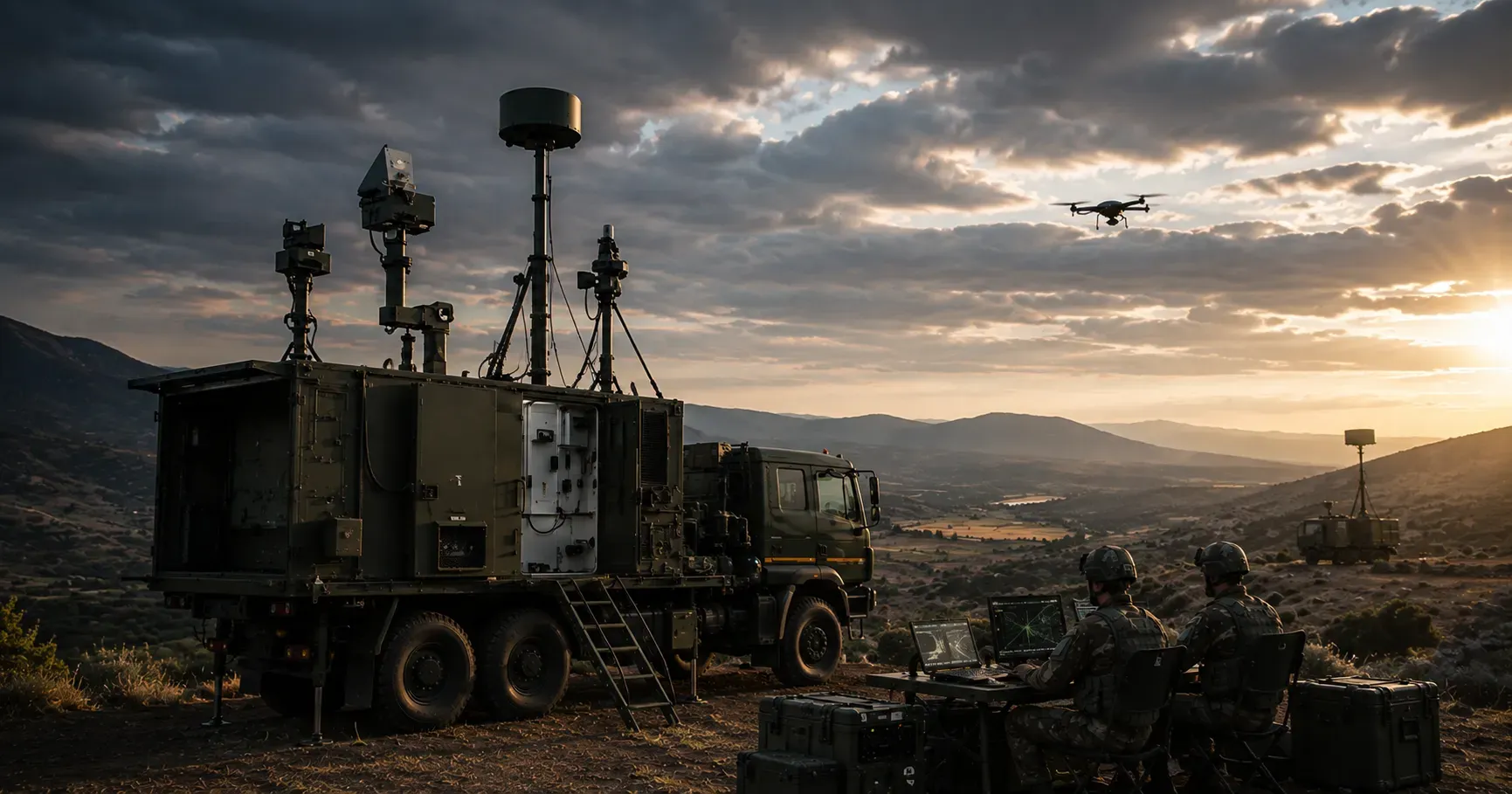
The counter UAS architecture sits as the necessary mirror of the strike fleet. DRDO transferred its indigenous anti drone system to Bharat Electronics Limited and other public sector partners in 2021. The platform combines radar detection, radio frequency detection, electro optical and infrared tracking, soft kill jamming for communication links, and hard kill laser engagement for terminal defeat. The D-4 anti drone system was the early DRDO platform that anchored the counter UAS roadmap.
Operation Sindoor produced field tested validation of the counter UAS stack. Director General Military Operations Lieutenant General Rajiv Ghai delivered the Operation Sindoor press briefing on 12 May 2025. He highlighted the performance of a layered architecture combining Counter Unmanned Aerial Systems, electronic warfare assets, and air defence weapons from the Army and Air Force. The architecture held through the night of 9 and 10 May 2025 (Press Information Bureau, 14 May 2025). Recovered debris from neutralised threats included Chinese origin PL 15 missiles, Turkish origin unmanned aerial vehicles, long range rockets, quadcopters, and commercial drones. The Akash surface to air missile system provided the area defence layer, with the Integrated Air Command and Control System tying the network together.
The Akashteer air defence command fabric anchors the Indian Army's network-centric counter UAS architecture. Bhargavastra is the indigenous rocket-based counter drone platform with swarm defeat capacity. The Aero India 2025 unveiling of a vehicle mounted counter drone system jointly developed by DRDO and a private partner extended the architecture into mobile platforms (Ministry of Defence, Aero India 2025 release).
Operation Sindoor and what it changed
Operation Sindoor on 7 May 2025 was the doctrinal inflection point for defence drones in India. The strike package included Indian Armed Forces precision strikes against terrorist infrastructure inside Pakistan and Pakistan occupied territory, without crossing the Line of Control or international boundary (Press Information Bureau, Operation Sindoor briefing, 14 May 2025). Indigenous drone warfare, layered air defence, and electronic warfare were integrated into the operation, with Harop loitering munitions used against radar sites and indigenous swarm assets co-deployed alongside.
The doctrinal change was structural. Army Training Command expanded drone operations into the regular curriculum across 19 establishments and trained over 50,000 personnel (Tribune Defence, March 2026). The Defence Acquisition Council cleared a ₹67,000 crore package on 5 August 2025. The Defence Procurement Board then recommended 60 Ghatak units on 3 March 2026, and the Emergency Procurement Route cleared indigenous kamikaze drone orders in April 2026. Raksha Mantri Rajnath Singh framed the operation as an Aatmanirbhar Bharat story at the Raphe mPhibr facility inauguration. He cited three Raphe mPhibr and DRDO joint products deployed within 14 months (Press Information Bureau, 30 August 2025).
Three lessons anchor the post-Sindoor doctrine. The layered counter-drone and electronic warfare architecture held under sustained attack across the night of 9 and 10 May 2025. Indigenous loitering munitions and swarm assets performed at combat tempo alongside imported Harop platforms. The procurement stack reorganised around Emergency Procurement Route timelines rather than multi-year Defence Acquisition Procedure cycles.
Who builds India's defence drones
The institutional architecture for Indian defence drones runs through five anchor nodes, with academic laboratories feeding a parallel pathway visible in the Sabal-50 logistics UAV. The Defence Research and Development Organisation leads India's DRDO drone programmes. The Aeronautical Development Establishment in Bengaluru runs the Rustom, TAPAS, Archer NG, and Ghatak design tracks. Gas Turbine Research Establishment leads the Kaveri dry engine derivative for Ghatak propulsion, with certification targeted for late 2026 (Defence Security Asia, reporting Aeronautical Development Establishment, April 2026).
Hindustan Aeronautics Limited anchors the loyal wingman track through CATS Warrior and the ALFA-S air launched swarm concept. Bharat Electronics Limited is the technology transfer recipient for DRDO's indigenous anti drone system and the lead production node for several counter UAS subsystems. Aeronautical Development Agency leads the design of the AMCA and the related manned and unmanned teaming architecture.
Government to government deals supplement the indigenous stack. The MQ-9B High Altitude Long Endurance Remotely Piloted Aircraft Systems agreement with General Atomics Aeronautical Systems was signed in October 2024. The deal was concluded under the Ministry of Defence's tri-service procurement route. The earlier Heron and Searcher acquisitions were procured from Israel Aerospace Industries under successive government contracts dating back to 2002.
The wider ecosystem rests on the Drone Federation of India. It represents over 550 Indian drone companies and a network of more than 5,500 certified drone pilots (Drone Federation of India industry briefing materials, Aero India 2025). The Production Linked Incentive scheme for drones and drone components carries a ₹120 crore outlay across three financial years. It anchored domestic manufacturing scale up alongside the 2021 import ban. The Defence Production and Export Promotion Policy framework reinforced indigenous content thresholds across Buy Indian IDDM and Buy Indian procurement categories.
Timeline of Indian military drone development
Indian unmanned aviation moved from imported ISR to indigenous strike and loitering in roughly two and a half decades. The milestones below anchor the current fleet against the events that shaped it.
Year | Milestone |
|---|---|
1999 | Kargil conflict exposes the ISR gap. Indian forces rely on limited manned reconnaissance and press for sustained unmanned capability. |
2002 | Heron Mk I inducted from Israel Aerospace Industries. India begins sustained MALE ISR operations across northern and eastern commands. |
2005 | Searcher Mk II expansion consolidates tactical ISR at brigade and corps level. |
2010 | DRDO Aeronautical Development Establishment launches Rustom I and Rustom II development, with Rustom II later renamed TAPAS BH. |
2020 | Indian Navy leases two MQ-9B SeaGuardian platforms for Indian Ocean Region maritime ISR. |
2021 | Ministry of Civil Aviation bans foreign drone imports outside research, defence, and security carve-outs, per the Indian drone import framework. |
2022 | TAPAS BH completes multiple development flight trials at Chitradurga. |
2024 | India signs the MQ-9B agreement with the United States for 31 platforms worth approximately USD 3.5 billion in October 2024. |
2025 | Operation Sindoor executes South Asia's first drone-led tri-service operation on 7 May 2025. The Defence Acquisition Council clears a ₹67,000 crore procurement on 5 August 2025. |
2026 | Defence Procurement Board recommends 60 Ghatak units on 3 March 2026. Emergency Procurement Route clears indigenous kamikaze drone orders in April 2026. |
2027 to 2030 | Ghatak first flight evaluation, MALE tranche induction, Sheshnaag maturation, and MQ-9B delivery window converge inside a single decade. |
The 15 year MALE demand band projects 350 to 400 platforms across the three services, aligned with the wider Indian drone manufacturing ecosystem.
The road ahead for India's defence drone programme
The forward look from May 2026 has four named inflection points. The first is Ghatak engine certification, with the GTRE Kaveri dry variant targeted for late 2026 certification ahead of Ghatak first flight evaluation. The second is the MALE drone tranche induction. The 87 platform indigenous order is expected to begin deliveries ahead of the 2029 to 2030 MQ-9B Predator induction window from the United States. The third is Sheshnaag programme maturation, with the canister launched Sheshnaag 20 swarming variant moving toward operational user trials and the Sheshnaag 150 progressing to formal procurement contracts.
The fourth inflection is doctrinal codification. Indian Army planning calls for thousands of drones inducted over the next decade across arms and services, with unmanned systems treated as battlefield necessity rather than auxiliary support. The 15 year MALE drone demand band projects 350 to 400 units across the three services (Indian Defence Research Wing, reporting Ministry of Defence projections, September 2025). The Indian Air Force issued a Request for Information in April 2026 for a hydrogen powered Medium Altitude Heavy Lift Airship. The brief opens the persistent ISR airship category, with a domestic design deadline closing on 30 April 2026.
The Tejas Mk2 and Ghatak parallel rollout creates India's first manned and unmanned teaming operational squadron in the late 2020s. The Defence Acquisition Council clearance pipeline through 2026 and 2027 will determine the tempo. The defence press flow over the same window indicates continuous procurement announcements across MALE, UCAV, loitering munition, and counter UAS categories. India's military drone market is sized between USD 4 billion by 2036 (Invest India, February 2026) and USD 4,997 million by 2033 at 11.8 per cent CAGR (Grand View Research, India Military Drone Market Outlook, 2026).