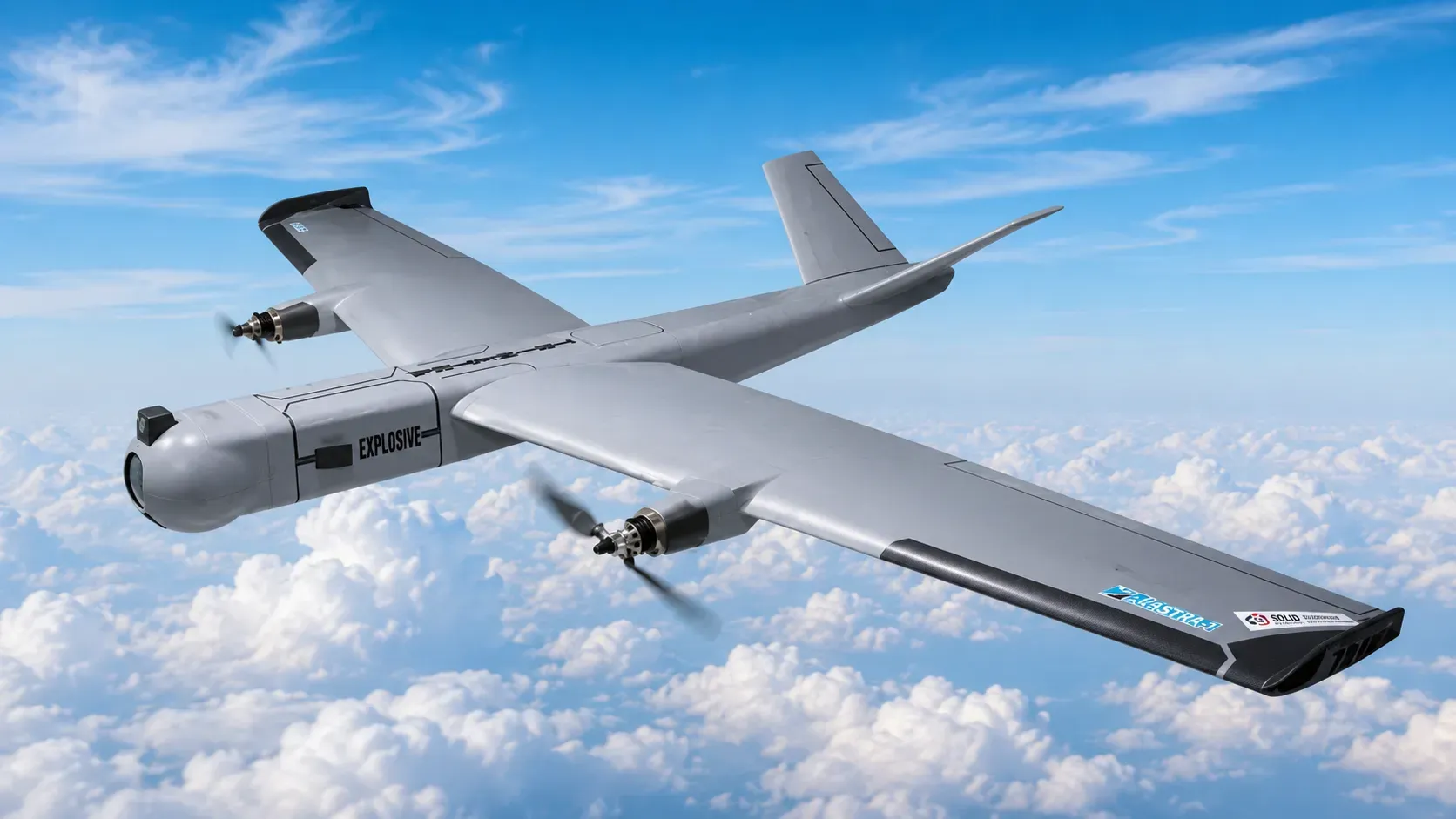
Drone simulators for military training sit inside a three-part picture. The procurement geometry has 19 training centres, roughly 600 simulators and a thousand training drones in flight. The doctrine, set after the May 2025 Operation Sindoor engagements, treats drones as a standard weapon system.
The throughput target is universal soldier-level drone proficiency by 2027 (Indian Masterminds, 29 December 2025). The 22 December 2025 Deolali contract for 700-plus indigenous VR simulators signals that the throughput layer is now being built (The Tribune, 22 December 2025).
Tracking what shifted on the western frontier
Two events anchor the timeline. The first is Operation Sindoor on the night of 8–9 May 2025. The operation validated drones as a primary combat instrument across the western frontier (The Tribune, May 2025).
The Indian Army responded by treating unmanned systems as standard arm-and-service equipment rather than a specialist capability. The second event is the Army's Expression of Interest in September 2025. The EOI covers 19 drone training hubs and roughly 600 training simulators. It also covers approximately 1,000 drones across nano to medium classes and 140 first-person view drones (Raksha Anirveda, 20 September 2025).
The doctrinal shift was made public soon after. Lieutenant General Devendra Sharma framed the 2027 deadline for universal soldier-level drone proficiency. He also set out the 8,000 to 10,000 drones per corps planning figure that gives the training stack its sizing logic (Indian Masterminds, 29 December 2025).
Defence Secretary R K Singh called Operation Sindoor a "reality check." He named gaps in electronic warfare, counter-UAS and military-grade drone manufacturing for GPS-denied environments (Deccan Herald, 2025). Those gaps are the brief the simulator infrastructure has to close.
The procurement-doctrine-throughput triad is the analytical frame the rest of this piece uses. Procurement is the EOI numbers. Doctrine is the post-Sindoor decision. Throughput is what simulators do inside the pipeline that connects the two.
Reading the procurement geometry behind the 19 training centres
The Indian Army drone training programme is anchored to a defined set of academies. The 19 centres include the Indian Military Academy at Dehradun and the Infantry School at Mhow. They also include the Officers Training Academies at Chennai and Gaya and the School of Artillery at Deolali.
The Army Training Command (ARTRAC) has been mandated to make drone operation a mandatory soldier skill (Raksha Anirveda, 20 September 2025). Each centre's supplier roster reflects the difference between Make-I, Make-II and the SP Model procurement routes.
The EOI envisages dedicated outdoor manoeuvre ranges and 24x7 indoor facilities. Training modules of 4 to 6 days run at Deolali, Mhow, Dehradun and Bengaluru, with batches of 25 participants each.
The 19 drone training centres India is standing up are being supplied under the Emergency Procurement 2025 mandate. The mandate compresses the standard acquisition cycle, and what the Emergency Procurement 2025 mandate authorises shapes every contract under it. The 22 December 2025 Deolali award for 700-plus indigenous VR simulators is the first large signed contract. Three-phase deployment to Category-A establishments is targeted for completion by Q2 2026 (The Tribune, 22 December 2025).
The category split inside the EOI carries operational logic. Nano drones cover motor skills and basic manoeuvring. Micro drones cover pilot proficiency and short-range surveillance. Small and medium drones cover day-and-night surveillance, reconnaissance and mission planning.
The 140 FPV drones cover loitering munition training and the short-range strike role validated during Operation Sindoor (Raksha Anirveda, 20 September 2025). The category split mirrors the DGCA Drone Rules 2021 weight bands: nano under 250g, micro 250g to 2kg, small 2kg to 25kg (DGCA, 25 August 2021).
The simulator's flight model has to replicate those bands accurately for cross-domain skill transfer. The simulator count of approximately 600 is sized against the throughput target, not against the drone count. That sizing logic is the giveaway that simulators are the pacing item.
Tracing the post-Sindoor tri-service learning architecture
The post-Sindoor doctrine has built a second layer above the Army's 19-centre plan. In May 2026, the Tri Service Unmanned Aerial Systems School was inaugurated at a frontline airbase in Punjab. Air Marshal George Thomas, Chief of the Western Air Command, opened the school. It is the joint centre for training, tactics development and procedure integration across the three services (The Tribune, May 2026).
The Army Technology Roadmap for UAS and Loitering Munitions was released in April 2026. The 50-page document identifies 30 types of unmanned systems across 80 variants, organised into surveillance, strike, air defence, special roles and logistics categories. Readers tracking how loitering munitions sit inside the UAS-and-loitering-munitions roadmap get the full taxonomy.
Operation Sindoor drone training impact is sharpest in the Western Command. Exercise Vayu Samanvay ran at the Naraingarh Field Firing Range near Ambala from 25 to 29 September 2025. The exercise integrated Western and South-Western Command formations to validate drone and counter-UAS employment in a contested electronic warfare environment (Press Trust of India, 29 September 2025).
Lieutenant General Manoj Kumar Katiyar, General Officer Commanding-in-Chief of Western Command, stated that drone warfare training had been strengthened in direct response to Operation Sindoor lessons. He named local fabrication and troop instruction as the priorities (The Tribune, 29 September 2025). Lt Gen Katiyar's remarks also named the Drone Didi initiative as a civil-military bridge. The Army committed to a dedicated programme supporting rural women drone operators (Khalsa Vox, 1 October 2025).
The civil tier moved in parallel. The BSF Drone Warfare School at the BSF Academy Tekanpur in Gwalior was inaugurated in August 2025 under the Ministry of Home Affairs (The Tribune, 27 August 2025). It is structured around the same operator-and-counter-operator architecture the Army is using.
The Indian Army also approved the Saksham counter-UAS grid in 2025 to enhance drone detection and neutralisation. What counter-UAS systems the Saksham grid covers maps the full layered architecture.
The counter-UAS scenario set the simulator stack now drills covers four layers: detection, classification, kinetic neutralisation by air-defence guns, and non-kinetic neutralisation by spoofing and jamming. Babina-range trials validated these layers in the months after Operation Sindoor (The Tribune, 2025).
How the Army's Operation Sindoor doctrine reshaped drone employment carries the full doctrinal context. The tri-service UAS school India announcement closes the loop the EOI started.
Mapping the throughput math underneath the universal-soldier deadline
Simulator-based training military drones is the layer that makes the 2027 target arithmetically feasible. A drone simulator is a software-and-hardware training rig that pairs a head-mounted display or screen with a physical drone controller and a procedural-fidelity flight model. It allows an operator to log basic-flight, FPV, ISR and tactical-scenario hours without consuming a live airframe.
A corps that fields 8,000 to 10,000 drones cannot live-fly every operator to certification standard within the deadline. Live-fly hours cost airframes, batteries, range time and weather windows. They also expose costly equipment to early-pilot crashes (Indian Masterminds, 29 December 2025).
How military drone simulators work in this pipeline is straightforward. The Deolali contract specifies high-fidelity, immersive training for military drone operators without reliance on live UAVs. The system supports FPV flying, ISR rehearsal, emergency response and tactical scenarios (The Tribune, 22 December 2025).
The benefits of drone simulator training military planners cite are measurable. Live-fly attrition during early training drops to near zero. Operator hours per certified pilot rise inside a fixed calendar window.
Selection signal sharpens because instructor-graded simulator performance is recorded automatically, which removes subjective bias from advanced-course selection. The same stack can run a counter-UAS scenario the next hour, which folds the offensive and defensive halves of drone warfare into one platform.
Sorting VR, FPV, classroom and software-in-the-loop trainers
Drone simulator types break into four broad categories used by Indian military training establishments. The first is the standalone VR drone simulator, which uses a head-mounted display, hand controllers and a procedural flight model. The second is the FPV drone simulator, used for racing-style quadcopter and loitering-munition operator training, typically paired with a physical FPV controller and goggles for tactile fidelity.
The third is the desktop or classroom simulator, which runs a high-fidelity flight model on a multi-monitor station for instructor-supervised batch training. The fourth is the Software-in-the-Loop simulator, which lets the flight software stack be tested against virtual sensors and environments before any code reaches a live airframe.
The functional layer matters more than the form factor. The table below sets out the principal training roles each type covers.
Simulator type | Primary training role | Best-fit operator group |
|---|---|---|
Standalone VR simulator | Basic flight, ISR rehearsal, tactical scenarios | Officer cadets, infantry, artillery |
FPV simulator | Racing-style control, loitering-munition strike, micro-drone manoeuvring | FPV strike teams, special operations |
Classroom desktop simulator | Batch certification, instructor-led drills | Recruits at training schools |
Software-in-the-Loop simulator | Flight-stack testing, mission-planning rehearsal | Engineers, mission planners |
The Indian Army has begun pulling all four into its training stack. The IIT Kanpur agreement with Central Command in March 2025 specifically covers a Remote Piloting Training Module and a Software-in-the-Loop Simulator for drones and UAVs. The aim is to replicate reconnaissance, surveillance and tactical-strike scenarios in a controlled virtual environment.
Building the indigenous stack from Deolali to Kanpur
Indigenous drone simulator India is the second design constraint inside the EOI. The Emergency Procurement 2025 mandate compresses delivery, but it also requires country-of-origin compliance. That requirement closes the door on imported simulator stacks at the Category-A scale (The Tribune, 22 December 2025).
The Deolali contract is the proof point that an indigenous pipeline exists at the volume the Army needs. Indian marketplaces list indigenous standalone VR drone flight simulator units in the ₹85,000 to ₹1,95,000 price band (IndiaMART listings, 2025). That band sets the indicative unit-economics floor at the small-procurement tier.
The academic-industry layer is the other half of the indigenous build. The IIT Kanpur Remote Piloting Training Module and Software-in-the-Loop Simulator agreement with Indian Army Central Command, signed in March 2025, was structured to deliver inside six months. It also anchors longer-term collaboration on next-generation training systems (Careers360, 29 March 2025). Readers tracking how the iDEX challenge cycle funds defence-tech start-ups see the parallel funding rail that feeds this academic pipeline.
The Madras Regimental Centre inaugurated a drone training laboratory in June 2025. The Battle Axe Division launched a workshop covering drone creation, maintenance and repair in November 2025 (Financial Content, November 2025). Together these point to a doctrine where the simulator and the airframe are developed in the same Indian engineering ecosystem.
VR drone training simulator Indian Army contracting is also pulling DRDO-tested platforms into the curriculum. These include the Rustom and TAPAS-BH-201 medium-altitude long-endurance systems on the surveillance side and the Lakshya remotely piloted vehicle on the target side. The DRDO drone programme map across Rustom, TAPAS and Lakshya carries the full inventory.
The Army Technology Roadmap specifies 30 types across 80 variants. That menu is what the indigenous stack now has to model accurately enough for tactical training to transfer to live operations (The Tribune, May 2026).
Forecasting the simulator surge across the next eighteen months
For the procurement officer reading the EOI, the binding constraint on the 2027 universal-soldier plan is now simulator throughput, not drone procurement. Live drones can be ordered in months. Certified operators cannot be produced at that pace without a simulator-led pipeline.
The Deolali 700-plus order is the volume signal. The IIT Kanpur RPTM-SITL pact is the depth signal. The Tri Service UAS School at Punjab is the joint-doctrine signal.
For the defence integrator, three buying triggers are now open in sequence. The first is the simulator stack itself, where indigenous standalone VR systems have a country-of-origin advantage under Emergency Procurement 2025. The second is the airframe-and-payload set that the simulator has to model, with the 30-types-80-variants roadmap as the catalogue. The third is the counter-UAS layer, where Saksham approvals create a parallel procurement track.
For the policy researcher, the missing public document is a primary Ministry of Defence release that consolidates the simulator-hours-per-soldier standard. Until that release surfaces, the public estimate of throughput will lean on Lt Gen Sharma's framing and the EOI numbers.
The drone surge is now bound by the simulator surge, and the throughput gate is the constraint Indian Army doctrine has to clear by 2027.