The BrahMos missile is the world's fastest operational supersonic cruise missile, a Mach 2.8 strike weapon fielded across land, sea, and air. BrahMos Aerospace, the Indo-Russian joint venture that produces the BrahMos missile, was formed in 1998 by India's DRDO and Russia's NPO Mashinostroyeniya.
On 11 May 2025, Defence Minister Rajnath Singh inaugurated the BrahMos Aerospace Integration and Testing Facility in Lucknow during Operation Sindoor. This pillar maps every variant, propulsion detail, and industrial and export inflection that defines the BrahMos family.
India Russia joint venture from 1998
The BrahMos missile programme was established in 1998 as a joint venture between India's Defence Research and Development Organisation and Russia's NPO Mashinostroyeniya. The ownership structure is 50.5% DRDO and 49.5% NPO Mashinostroyeniya, with joint capital of $250 million at inception (BrahMos Aerospace corporate history).
The BrahMos full form draws from the Brahmaputra and Moskva rivers, signalling the joint venture's Indo-Russian identity. The BrahMos missile manufacturer is BrahMos Aerospace, with Dr Sivathanu Pillai as founding CEO (Business Today, 13 July 2026).
The first BrahMos test took place on 12 June 2001 from the Integrated Test Range at Chandipur in Odisha. That test established the foundation for a missile family adapted for land launchers, warships, submarines, and combat aircraft. BrahMos evolved through land, naval, and air versions on one two-stage propulsion spine, giving India a portfolio of cruise missiles in India built on shared engineering.
The Indian Navy became the first service to induct BrahMos in 2005, and the Indian Army followed with land-based induction in 2007. The Indian Air Force integrated the air-launched BrahMos-A on the Sukhoi Su-30 MKI and inducted the configuration in 2019 (BrahMos Aerospace, product page).
The BrahMos programme now sits at the top of India's stand-off strike arsenal. It also forms the reference point for the wider portfolio of defence drones in India inducted across the services. The specification snapshot below captures the family's headline numbers before the article maps each variant.
Attribute | BrahMos (baseline) | BrahMos-A | BrahMos-ER | BrahMos-NG | BrahMos-II |
|---|---|---|---|---|---|
Speed | Mach 2.8 | Mach 2.8 | Mach 2.8 | Mach 3.0 target | Mach 7 target |
Range | 290 km | 450-500 km | up to 800 km reported | 290-350 km class | 1,500 km target |
Launch mode | Land, naval, submarine | Su-30 MKI air-launched | Land, naval, air | Tejas, MiG-29, Su-30 MKI | Hypersonic platforms |
Warhead | 200-300 kg | 300 kg | 200-300 kg | Compact class | Under development |
Status | Operational | Operational | Fielded | In development | In development |
Two-stage ramjet architecture and BrahMos speed
BrahMos missile speed comes from a two-stage propulsion architecture. The missile uses a solid-propellant booster for launch acceleration and a liquid-fuel ramjet for sustained supersonic cruise (BrahMos Aerospace, product page). The booster accelerates the missile to the ramjet's operating regime, then separates once cruise conditions are established.
A ramjet differs from a conventional turbojet. It uses no compressor or turbine to compress incoming air, so the missile's forward motion supplies the airflow the propulsion system requires. That constraint is why a ramjet needs a booster to start.
The published BrahMos speed is approximately Mach 2.8. That figure places it in the front rank of supersonic missile classes fielded anywhere. At that velocity, the weapon closes distance in a short flight window and leaves less reaction time than a comparable subsonic cruise missile.
Speed drives the terminal engagement problem. A supersonic cruise missile combines high velocity with a sea-skimming or low-altitude terminal profile. That combination forces an intercepting radar to detect, track, and cue a shot inside seconds.
Whether the BrahMos missile can be intercepted therefore has no easy answer. Air-defence solutions scale with detection range and reaction time, and a Mach 2.8 missile flying five to ten metres above the sea compresses both. The published performance envelope is what makes BrahMos a demanding air-defence problem.
BrahMos is not simply a faster version of a conventional cruise missile. Its propulsion architecture shapes the flight profile, thermal environment, structural requirements, guidance architecture, and launch-platform integration. The architecture has held even as the BrahMos variants expanded across the family.
BrahMos-II represents the larger propulsion transition, with scramjet propulsion where combustion occurs with airflow remaining supersonic through the engine. That transition sits inside a dedicated section later in this pillar.
Block I, II, and III land-attack variants
The land-launched BrahMos family developed through successive Block configurations as the Indian Army expanded its precision-strike requirements. The Block variants are capability stages rather than separate missile families, each holding the propulsion architecture constant while extending the guidance and mission envelope.
Block I established the land-based operational architecture. The Indian Army inducted the land-based BrahMos system in 2007, gaining a mobile supersonic strike capability that sat between conventional artillery and longer-range strategic strike systems.
Block II introduced a stronger land-attack orientation. It moved the missile beyond an anti-ship framing towards precision engagement of selected land targets. Block III continued the evolution with enhanced land-attack capability and improved performance in difficult terrain, including deployments along the northeastern frontier.
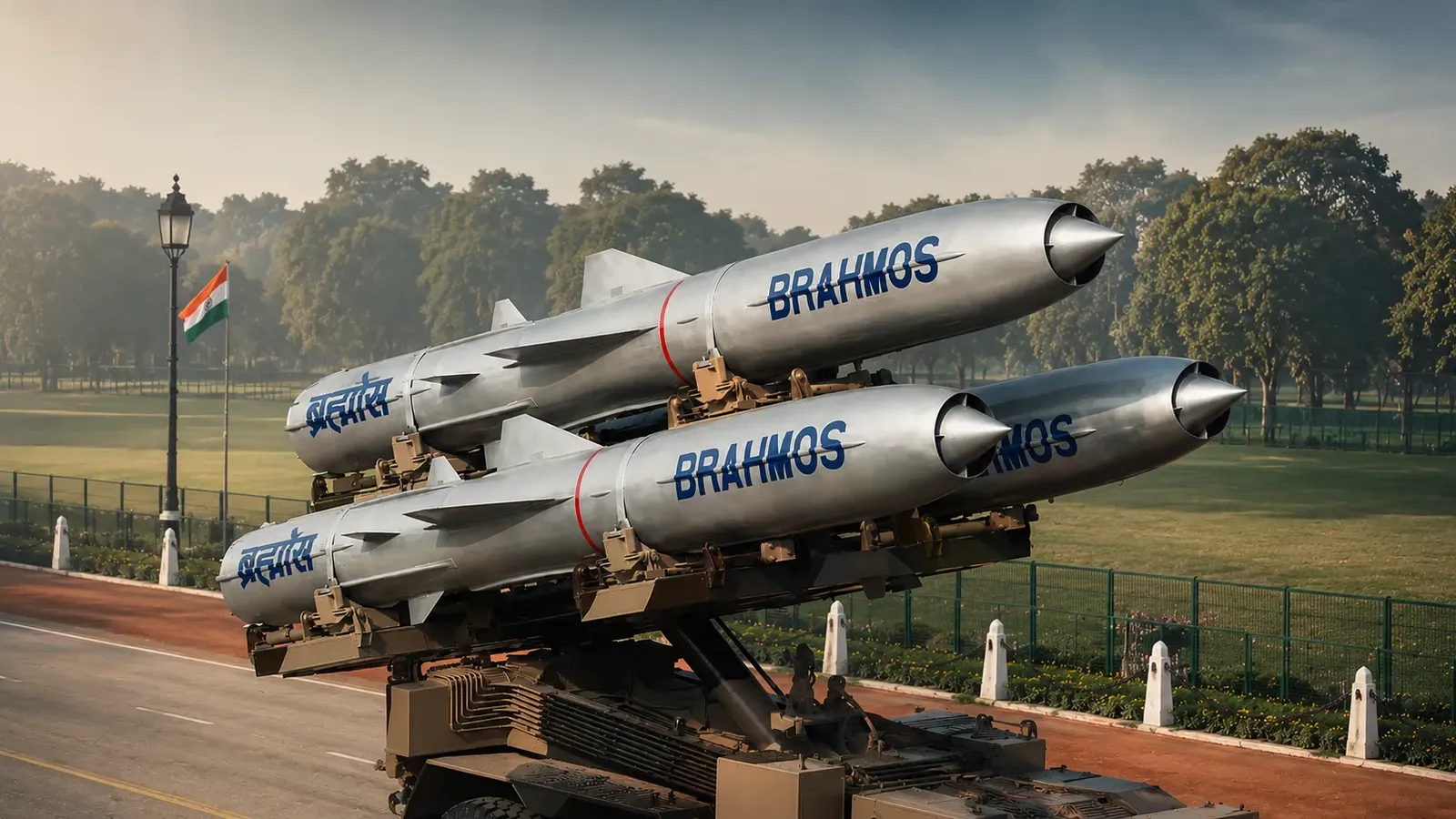
The BrahMos launcher is part of the operational system alongside the missile itself. A BrahMos land battery is not simply an aerodynamic vehicle. The complete system includes a Tatra-mounted mobile autonomous launcher, command infrastructure, targeting inputs, navigation aids, communications, maintenance, and reload capability.
The land system demonstrates why mobility matters for stand-off strike. A road-mobile launcher can relocate between firing positions, reducing the predictability associated with a fixed launch site. The combination of mobility, speed, precision guidance, and range gives the land-launched BrahMos family a role distinct from artillery and shorter-range tactical missiles. The same operational logic shapes the advanced military drones fielded by Indian forces on the sensor-to-shooter side of the battlefield.
The Block evolution also created a foundation for later range and guidance improvements. India's membership of the Missile Technology Control Regime in 2016 was the pivotal moment in that trajectory. The earlier export-control environment had constrained the range available to some BrahMos configurations. The post-MTCR period marks a major transition in the family rather than a specification update.
Naval BrahMos on frontline warships
The naval BrahMos family is the original operational service branch of the programme. The Indian Navy inducted BrahMos in 2005, establishing the missile as a ship-launched supersonic cruise weapon (BrahMos Aerospace, product page).
Naval BrahMos provides warships with an anti-ship strike capability. Configurations designed for the role also support land-attack missions. The missile integrates with surface combatants using vertical launch cells or inclined launcher arrangements depending on platform generation.
The naval role changes the operational problem compared with a land launcher. A warship provides mobility at sea, while the missile adds stand-off reach beyond the ship's direct weapons envelope. Target detection, classification, tracking, fire-control data, navigation, communications, and launch authorisation form the broader kill chain around the missile.
Submarine launch is a separate engineering challenge. A submarine-launched BrahMos configuration requires underwater launch integration, pressure-management considerations, platform compatibility, and a launch sequence different from surface ships.
The Indian Navy's continuing BrahMos procurement reflects the scale of the maritime requirement. On 22 February 2024, the Cabinet Committee on Security approved a Rs 19,000 crore naval procurement package for more than 200 BrahMos missiles (Cabinet Committee on Security, 22 February 2024).
Formal March 2024 contracts included Rs 19,518.65 crore for extended-range BrahMos missiles and Rs 988 crore for the ship-borne system (Ministry of Defence contract announcement, March 2024). BrahMos now forms the strike backbone of a broader naval outfit connecting missiles, launchers, ships, sensors, command networks, and logistics.
Arming the Su-30 MKI with the air-launched BrahMos-A
The BrahMos-A is the air-launched cruise missile branch of the family. It was designed for carriage by the Indian Air Force's Sukhoi Su-30 MKI. The IAF inducted the air-launched BrahMos configuration in 2019, adding an airborne stand-off strike layer to the programme (BrahMos Aerospace, product page).
Air launch changes the missile's starting conditions. The aircraft provides altitude, velocity, navigation, and positioning before missile release, and the weapon begins its powered flight from an elevated and mobile launch platform.
Integration also changes the aircraft engineering problem, because a heavy supersonic missile affects aircraft centre of gravity, aerodynamic loads, carriage configuration, release conditions, and mission planning.
The combination of Su-30 MKI and BrahMos-A creates a strike system rather than an aircraft with an extra weapon. The aircraft extends the missile's launch geometry. The missile provides the stand-off strike effect. This layered logic sits inside the wider manned-unmanned teaming doctrine now shaping how the Indian Air Force imagines high-end strike packages.
The extended-range air-launched configuration expanded the operational envelope further. On 12 May 2022, the Indian Air Force tested an extended-range BrahMos from a Su-30 MKI in the Bay of Bengal (Ministry of Defence release, 12 May 2022).
The test paired an aircraft with a long combat radius against a missile with extended stand-off distance. The pattern mirrors the payload logic behind the combat air teaming system programme by HAL.
The air-launched configuration also created a path towards lighter missiles. BrahMos-NG addresses the platform constraint directly by reducing size and weight. Aircraft integration determines which aircraft can carry the weapon. A lighter missile expands the compatible fleet without demanding the same structural integration burden as the larger BrahMos-A.
BrahMos missile range after MTCR full membership
BrahMos missile range changed after India joined the Missile Technology Control Regime as a full member in June 2016. Membership removed the export-control constraint that had shaped the earlier range envelope (Ministry of External Affairs / PIB release, 27 June 2016).
The original public range associated with BrahMos was around 290 kilometres. Extended-range versions moved beyond that figure, with testing of the extended-range configuration beginning in 2017.
Service range reached around 450 to 500 kilometres. Reported flight tests approached 800 kilometres for land and ship-launched configurations (Ministry of Defence releases; BrahMos Aerospace, product page).
Range is therefore a family attribute, not a single number. A reader looking up BrahMos missile range in km encounters different figures because different variants, launch platforms, and development stages carry different published envelopes. The same variance feeds public confusion about BrahMos missile cost per unit, because unit price varies with variant, launch mode, and integration package.
The extended-range programme changed the strategic value of the weapon. Greater stand-off distance allows launch platforms to remain farther from defended areas. Air and maritime operations benefit particularly, because an aircraft or warship no longer needs to approach a defended zone as closely.
The MTCR transition matters for exports as well as domestic capability. Range therefore has both a technical and a policy dimension. Engineers still had to validate propulsion, guidance, structural loads, thermal conditions, and terminal behaviour before the extended-range variant could enter service. That policy-engineering interaction will sharpen as BrahMos variants move beyond the legacy range envelope.
BrahMos-NG for Tejas, MiG-29, and lighter platforms
BrahMos-NG, also written as BrahMos NG, is the next-generation branch designed around a smaller and lighter air-launched configuration. Its central purpose is to expand BrahMos integration to aircraft that cannot carry the full-size air-launched missile (BrahMos Aerospace, BrahMos-NG product page).
The smaller configuration addresses a straightforward platform problem. Missile dimensions and mass determine which aircraft can carry the weapon, where it can be mounted, and what flight restrictions apply after integration. BrahMos Aerospace identifies the LCA Tejas, the MiG-29, and the Su-30 MKI among the aircraft platforms associated with BrahMos-NG integration plans (BrahMos Aerospace, BrahMos-NG product page).
BrahMos-NG specifications reduce the missile's weight to roughly half of the current BrahMos-A configuration. A compact airframe is optimised for internal or external carriage on lighter fighters.
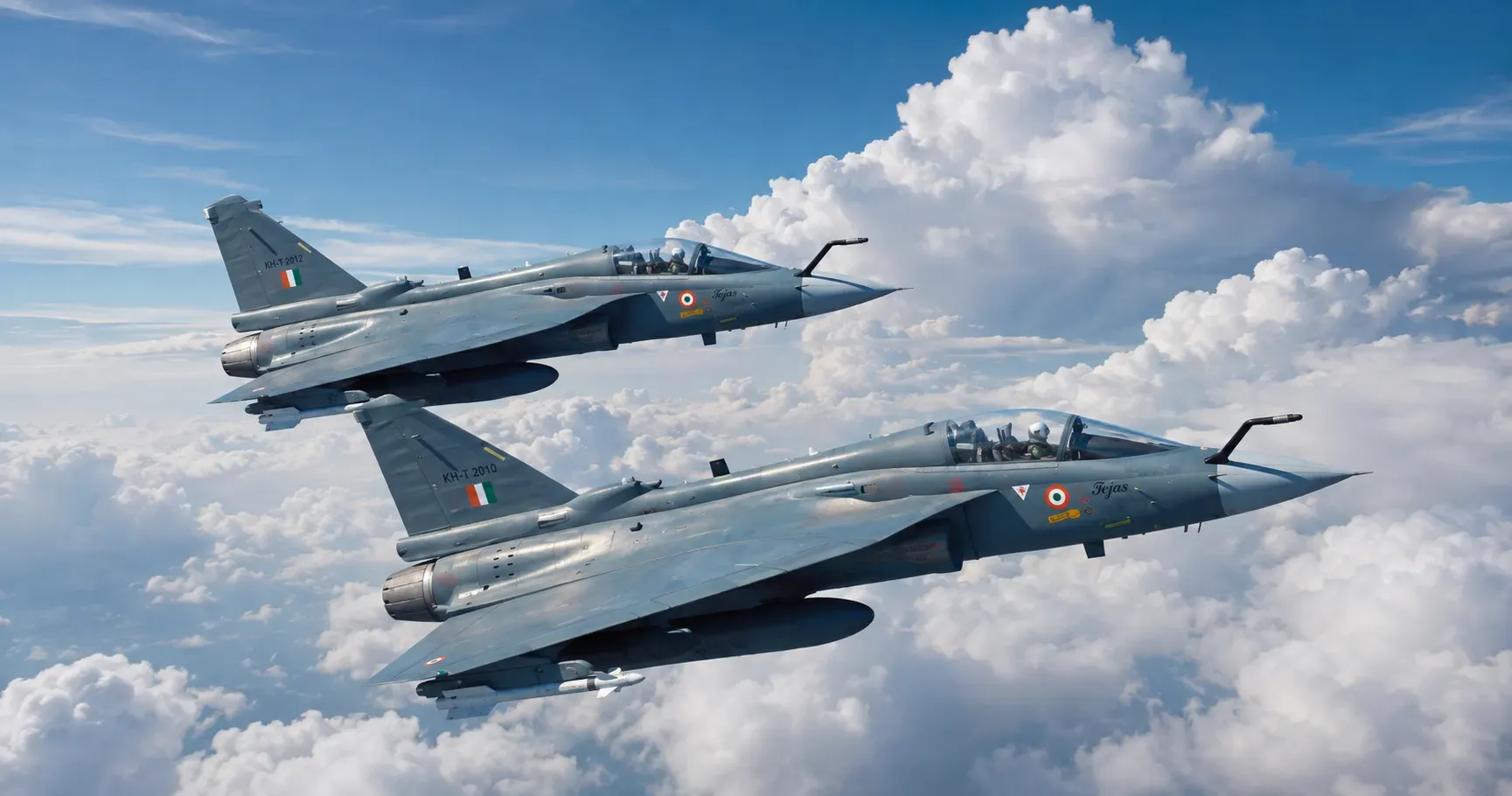
The reduced size permits multi-round carriage on frontline platforms. Su-30 MKI is projected to carry a larger BrahMos-NG salvo than the single BrahMos-A it carries today. Tejas Mk1A becomes a BrahMos platform for the first time.
The significance of BrahMos-NG extends beyond a smaller missile body. It changes the range of aircraft types available for supersonic stand-off strike and alters how air forces distribute missile capacity across their fleets.
BrahMos-NG is consequently an important bridge between the existing BrahMos-A architecture and future air-launched strike systems. It preserves the family identity while changing the platform envelope, positioning BrahMos as a weapon compatible with the entire Indian fighter fleet rather than a single heavy platform.
Advancing towards the BrahMos-II hypersonic
BrahMos-II, sometimes written as BrahMos 2 or Brahmos II, represents the programme's transition from supersonic cruise propulsion towards hypersonic flight. The BrahMos-II hypersonic missile is associated with scramjet propulsion. The planned speed regime sits around Mach 7. The range is projected beyond 1,000 kilometres, with an induction target near 2031 (DRDO scramjet ground test, 25 April 2025; BrahMos Aerospace, product page).
The key difference is propulsion. A conventional ramjet supports combustion with subsonic airflow through the engine, while a scramjet is designed to sustain combustion with airflow remaining supersonic.
That distinction is the reason BrahMos-II is not simply a faster ramjet. It is a different propulsion class.
On 25 April 2025, DRDO reported a scramjet combustor ground test at the Defence Research and Development Laboratory in Hyderabad. The combustor sustained combustion for more than 1,000 seconds during the trial. DRDO characterised the duration as a milestone for India's Hypersonic Cruise Missile Development Programme (DRDO release, 25 April 2025).
The ground test does not mean a complete BrahMos-II missile has entered operational service. The programme remains under development. Prototype assembly and ground testing phases extend through the second half of the decade before flight trials begin.
Hypersonic development introduces engineering problems beyond simply increasing speed. Thermal loads, materials, propulsion stability, guidance accuracy, aerodynamic control, communications, and terminal manoeuvring all become more demanding as velocity increases.
The programme represents a technology transition, not another Block number. The existing BrahMos family is an operational supersonic cruise system, whereas BrahMos-II is a development programme aimed at hypersonic performance.
The scramjet effort also has relevance beyond missile speed. It is part of a broader Indian push in high-speed propulsion, thermal-management, materials, and flight-control expertise. That base will feed other DRDO hypersonic projects including the Hypersonic Technology Demonstrator Vehicle.
BrahMos combat debut inside Operation Sindoor
Operation Sindoor provided the clearest public combat reference point for BrahMos in the current programme cycle. The operation ran between 7 and 10 May 2025. The Press Information Bureau documented the tri-service precision-strike campaign in briefings across the same week (Press Information Bureau, 12 May 2025).
The combat context changes how the programme should be described. BrahMos is no longer only a tested missile or a procurement programme, because its use in a named military operation established combat employment of the system. The full tri-service account, including the Indian Air Force role in Operation Sindoor, sits inside dedicated primary-source reporting.
The Ministry of Defence and PIB documented the wider precision-strike operation. Detailed BrahMos employment came through named-source reporting after the operation closed.
Air Chief Marshal V R Chaudhari (retd) was cited as the named source for a figure of approximately fifteen BrahMos missiles fired during Operation Sindoor (The Week, 24 December 2025). That figure remains a named-source attribution rather than a PIB or Ministry of Defence confirmed number. This pillar treats it as such.
The operation confirmed the value of launch-platform diversity. A missile available from land, sea, and air creates different options for force planners and complicates any attempt to predict the origin of a strike. Operation Sindoor also validated the Su-30 MKI plus BrahMos-A combination under real operational timelines, from targeting through launch through post-strike assessment.
BrahMos fits inside a broader stand-off architecture that also includes crewed aircraft, unmanned systems, electronic warfare, air defence, surveillance, and command networks. The relationship with unmanned strike is complementary.
A supersonic cruise missile provides speed, range, and concentrated kinetic effect. In contrast, loitering munitions inducted by the Indian armed forces provide a different combination of persistence, cost, and target-engagement flexibility. That is the point where the drone versus missile cost asymmetry begins to shape doctrinal choices.
BrahMos Aerospace Lucknow production base
The BrahMos Aerospace Integration and Testing Facility in Lucknow represents the industrial expansion of the programme inside India. Defence Minister Rajnath Singh inaugurated the facility on 11 May 2025 during Operation Sindoor, on National Technology Day (Prasar Bharati / newsonair.gov.in bulletin, 11 May 2025).
The facility adds an industrial dimension to a programme that began as an international joint venture. Lucknow sits inside Uttar Pradesh's defence-industrial development strategy, and the site provides a domestic base for integration and testing while supporting the broader missile-production supply chain. The Lucknow node connects into the wider network of India's drone manufacturing hubs including the UP defence corridor.
The programme's scale is reflected in the planned production trajectory. BrahMos Aerospace has discussed a production capacity of approximately 80 to 100 missiles a year as the Lucknow operation expands. Production continues at Hyderabad and Thiruvananthapuram alongside the Lucknow ramp (BrahMos Aerospace communications). Indigenous content across the newer variants has crossed 80 per cent, according to programme communications.
Manufacturing throughput matters because a modern missile capability requires more than successful flight tests. Operational readiness depends on production cadence, quality control, component availability, acceptance testing, maintenance, storage, and replenishment. The industrial base also affects export credibility, because foreign customers evaluate whether a supplier can sustain production and meet contractual delivery schedules.
The Lucknow facility is therefore part of the transition from developing a missile to sustaining a scalable national strike capability. It establishes a manufacturing base capable of supporting both domestic re-arming and export deliveries at the same time.
Turning BrahMos into India's flagship defence export
BrahMos has become the reference case for India's defence-export ambitions. The BrahMos Philippines contract made the country the first foreign customer for the system, with the first batch delivered in April 2024 (BrahMos Aerospace media release, 19 April 2024). The Philippine contract, signed in January 2022, is valued at $374.96 million. It covers three Shore-Based Anti-Ship Missile System batteries with training and integrated logistics support.
The first Philippine delivery was transported using an Indian Air Force C-17 Globemaster III aircraft. The second battery was delivered by sea in April 2025. The third battery follows under the continuing contract schedule (BrahMos Aerospace media release, April 2025).
The two deliveries demonstrate that an export contract involves more than manufacturing the missile. Transport, ground equipment, training, documentation, acceptance, support, and delivery sequencing all form part of the system. BrahMos exports also show the value of a jointly developed system with an established Indian operational base. A customer acquires a system already integrated into Indian service structures.
The Philippine contract has become the reference point for future campaigns. BrahMos Vietnam has reportedly concluded a $629 million range order, and BrahMos Indonesia has finalised an agreement in the $200 to 300 million range (BrahMos Aerospace media briefings; Ministry of External Affairs communications).
The programme sits at the leading edge of India's drone export framework and the broader Rs 35,000 crore defence-export ambition.
Export growth creates a policy question alongside the commercial opportunity. Missile range, technology transfer, end-user controls, and international obligations must remain aligned as the family evolves. That question sharpens as BrahMos moves beyond the 290-kilometre class and develops extended-range and hypersonic technologies. India's export model will need to combine industrial capacity with disciplined technology governance.
200 BrahMos missiles across the Indian Navy fleet
The Indian Navy's BrahMos procurement programme shows the missile family moving from individual platform integration towards fleet-level strike capacity. The Cabinet Committee on Security approved a package for more than 200 BrahMos missiles India will hold across its surface fleet in February 2024. The reported approval value was around Rs 19,000 crore (Cabinet Committee on Security, 22 February 2024). Public reporting has since described a broader ambition to arm every major surface combatant in the frontline fleet with BrahMos by the end of the decade.
The scale of the procurement changes the operational conversation. The question is no longer whether a particular warship can carry BrahMos. It becomes how a fleet sustains a common supersonic strike capability across platforms, deployments, maintenance cycles, and replenishment requirements.
That requires a complete strike outfit. Launchers, missiles, sensors, communications, command systems, maintenance infrastructure, training, and logistics must operate as one architecture.
The same principle applies to the broader BrahMos family. Land launchers provide mobile strike options, naval systems provide maritime stand-off capability, and air-launched variants provide airborne reach. BrahMos-NG will widen aircraft compatibility, while BrahMos-II targets a hypersonic future.
The family represents a layered strike architecture rather than a single missile model. It operates alongside the Akashteer air defence command network on the defensive side of the same posture.
Land, sea, and air launch modes carry different signatures, reload cycles, and sortie generation rates. A BrahMos-II class hypersonic successor will compress the engagement timeline again once it enters service. Between now and then, the extended-range family and BrahMos-NG together define the operational envelope of India's supersonic strike posture.
Three inflection points now define India's stand-off strike posture. The first is the BrahMos-II approval trajectory. The second and third are the Lucknow production ramp to 80-100 missiles a year and the Vietnam and Indonesia export contracts.
One open policy question sits above all three. It concerns how India's export doctrine will negotiate MTCR obligations as BrahMos moves beyond 800 kilometres into hypersonic ranges. The next twenty-four months will begin to answer it.