The DRDO organisation structure sits under the Department of Defence R&D inside the Ministry of Defence. It runs across seven technology clusters and forty-six laboratories that supply missiles, combat aircraft, naval systems, radars, and soldier-support technologies. Two anchors frame the 2026 picture: Chairman DRDO transition on 1 June and DFP-2026 release on 29 June. This piece walks the mandate-cluster-lab-programme lattice as a reference page.
A brief history of DRDO and its laboratory network
The DRDO organisation structure has its origin in a 1958 amalgamation of three predecessors (DRDO, About DRDO, 1 June 2026). The predecessors were the Technical Development Establishment of the Indian Army, the Directorate of Technical Development and Production, and the Defence Science Organisation. The founding organisation operated ten establishments.
The DRDO structure and labs footprint has since expanded across seven decades (DRDO, About DRDO, 1 June 2026). It now covers around forty-one laboratories and five DRDO Young Scientist Laboratories.
The founding charter placed DRDO under what is now the Department of Defence Research and Development inside the Ministry of Defence. Its mandate covers the design, development, and induction support of sensors, weapon systems, platforms, and allied equipment (DRDO, About DRDO, 1 June 2026). The work spans land, air, sea, space, and cyber domains. The Sanskrit motto Balasya Mulam Vigyanam, the source of strength is science, has anchored the organisation since 1958.
The DRDO history from 1958 has scaled the research charter into a national lattice (DRDO, About DRDO, 1 June 2026). The disciplines covered include aeronautics, armaments, electronics, combat vehicles, engineering systems, instrumentation, missiles, advanced computing, special materials, naval systems, life sciences, and information systems. The manpower footprint runs to around five thousand scientists in the Defence Research and Development Service and roughly twenty-five thousand other scientific, technical, and supporting personnel. Balasya Mulam Vigyanam remains the discipline the organisation carries into its founding decade of the twenty-first century.
Leadership transition and the DFP-2026 financial reform
Two events in 2026 anchor the current DRDO organisation structure. Dr Samir V Kamat had served as Secretary DDR&D and Chairman DRDO since August 2022 (Ministry of Personnel, 26 May 2025 order). He completed his tenure on 31 May 2026.
The Appointments Committee of the Cabinet then assigned additional charge of Secretary DDR&D and Chairman DRDO to Defence Secretary Rajesh Kumar Singh. He is a 1989-batch IAS officer of the Kerala cadre who took over as Defence Secretary on 1 November 2024.
The second anchor arrived four weeks later. On 29 June 2026, Rajnath Singh released the Delegation of Financial Powers to DRDO (Ministry of Defence, 29 June 2026). The framework, styled DFP-2026, enhances functional empowerment across the Department of Defence R&D.
The DFP-2026 introduces dedicated financial provisions for trial campaigns, testing and evaluation activities, and pre-project R&D initiatives. It also creates clear segregation of grants for Extra-Mural Research Projects, Defence Innovation Accelerator Centres of Excellence, and Technology Development Fund projects.
The reform arc traces back to 1 January 2025, when the Ministry of Defence declared 2025 the Year of Defence Reforms. At the 67th DRDO Foundation Day the same day, Rajnath Singh set a delivery target for the organisation. The target was to complete one hundred DRDO projects by the 68th Foundation Day (Ministry of Defence, 2 January 2025).
At the 68th Foundation Day on 1 January 2026, the minister cited the decisive role of DRDO-developed weapons during Operation Sindoor. He named the Sudarshan Chakra directive as the next DRDO delivery frame (Ministry of Defence, 1 January 2026). The current DRDO chairman inherits both the DFP-2026 machinery and the Sudarshan Chakra directive.
DRDO administrative structure under the Ministry of Defence
The Department of Defence R&D sits inside the Ministry of Defence, alongside the Departments of Defence, Defence Production, and Military Affairs. DRDO is the executive research arm of DDR&D. The Secretary DDR&D also holds the position of Chairman DRDO, giving one office both the policy and the operational leadership seat. The Chief of Defence Staff sits parallel to this office and receives DRDO deliverables through the Integrated Defence Staff.
The reporting chain runs from the Ministry of Defence at the top, down through DDR&D, into the Chairman DRDO's office at DRDO Bhawan on Rajaji Marg. Below the Chairman sit senior scientists designated as Chief Controllers of Research and Development, each owning one of the seven technology clusters. Cluster Directors General and Chief Controllers together anchor the technology leadership tier.
Corporate directorates handle the cross-cutting functions of resources, finance, human resources, planning and coordination, and industry interface (DRDO, Corporate Clusters, current). The DRDO organisation chart therefore has a policy layer, an executive layer, a cluster layer, a lab layer, and an industry-transfer layer.
Lab directors report to their Chief Controller and hold the operational programme charge for their laboratory (DRDO, Organisation Chart, current). The Chief Controllers coordinate cross-cluster technology cascades so that expertise built inside one programme flows into the next. The Sudarshan Chakra directive announced at the 68th Foundation Day will be delivered through this same administrative spine.
Who does what across the DRDO organisation
DRDO's operating stack has eight distinct layers, each with its own accountability and its own decision authority. Reading the stack top to bottom clarifies which office owns which decision.
Layer | Role | Key entities |
|---|---|---|
Ministry of Defence | Political and policy leadership | Defence Minister; Departments of Defence, DDR&D, Defence Production, Military Affairs |
Department of Defence R&D | Executive R&D leadership and budget authority | Secretary DDR&D who also serves as Chairman DRDO |
Chief Controllers R&D | Cluster-level technology leadership | Seven Chief Controllers, one per technology cluster |
Technology clusters | Group laboratories by technology domain | Aero, ACE, ECS, MCC, MSS, NS and M, SSS |
Laboratories | Execute research and programme delivery | Around forty-one primary labs plus five DYSLs, totalling forty-six sites |
Test facilities | Evaluate systems and prototypes | Integrated Test Range at Balasore, Proof and Experimental Establishment at Balasore |
Industry partners | Production and technology absorption | DPSUs like HAL, BEL, BDL, BEML, GRSE; ToT-licensed MSMEs |
Innovation channels | External R&D pathways | iDEX, Technology Development Fund, Extra-Mural Research, DIA-CoE grants |
The eight layers map to distinct financial channels under the DFP-2026 delegation-of-financial-powers reform. The reform routes pre-project R&D funds to the cluster layer, trial-campaign funds to the test-facility layer, and Extra-Mural Research and DIA-CoE grants to the innovation-channel layer.
The seven DRDO technology clusters and their labs
DRDO's operations are organised into seven technology clusters (DRDO, Technology Clusters, current). Each cluster is led by a Chief Controller of R&D and groups a defined set of laboratories. The seven technology clusters of DRDO cover every domain the armed forces call on the organisation to deliver.
The following master table lists the seven clusters, their core mandate, every laboratory that reports into them, and the major technology areas each cluster delivers. It is the authoritative cluster-to-lab map for the DRDO organisation chart.
DRDO cluster | Core mandate | All laboratories | Major technology areas |
|---|---|---|---|
Aeronautical Systems (Aero) | UAVs, aero engines, airborne systems, parachutes | ADE (Bengaluru), CABS (Bengaluru), GTRE (Bengaluru), ADRDE (Agra), plus CEMILAC certification centre (Bengaluru) | UAVs, aero gas turbine propulsion, AEW&C, parachutes and decelerators, lighter-than-air platforms |
Armament and Combat Engineering Systems (ACE) | Weapons, explosives, combat vehicles, engineering equipment | ARDE (Pune), CFEES (Delhi), CVRDE (Chennai), HEMRL (Pune), PXE (Balasore), R&DE Engineers (Pune), VRDE (Ahmednagar) | Artillery, small arms, munitions, propellants and explosives, tanks, bridging systems |
Electronics and Communication Systems (ECS) | Radar, EW, electro-optics, communications | DARE (Bengaluru), DEAL (Dehradun), DLRL (Hyderabad), IRDE (Dehradun), LASTEC (Delhi), LRDE (Bengaluru), plus DYSL-CT (Chennai) | Radars, avionics, electronic warfare, laser systems, directed-energy weapons, EO/IR sensors |
Micro Electronic Devices, Computational Systems and Cyber Security (MCC) | Semiconductors, HPC, AI, cyber | CAIR (Bengaluru), ISSA (Delhi), SAG (Delhi), SSPL (Delhi), plus DYSL-AI (Bengaluru) and DYSL-QT (Pune) | Microwave tubes, solid-state devices, AI and robotics, cryptology, cyber security, quantum |
Missiles and Strategic Systems (MSS) | Strategic and tactical missiles and associated systems | ASL (Hyderabad), DRDL (Hyderabad), RCI (Hyderabad), TBRL (Chandigarh), ITR (Balasore), plus DYSL-AT (Hyderabad) | Ballistic missiles, cruise missiles, air-to-air and surface-to-air missiles, propulsion, guidance |
Naval Systems and Materials (NS and M) | Naval sensors, weapons, propulsion, materials | NPOL (Kochi), NSTL (Visakhapatnam), NMRL (Ambernath), DMRL (Hyderabad), DMSRDE (Kanpur), DLJ (Jodhpur), plus DYSL-SM (Hyderabad) | Sonars, torpedoes, mines, AIP fuel-cell propulsion, special alloys and composites |
Soldier Support System (SSS) | Life sciences, food, physiology, biomedical, CBRN | DEBEL (Bengaluru), DIBER (Haldwani), DFRL (Mysore), DIHAR (Leh), DIPAS (Delhi), DIPR (Delhi), DRL (Tezpur), INMAS (Delhi), DRDE (Gwalior) | Physiology, high-altitude research, defence food, biomedical devices, CBRN protection |
The DRDO Young Scientist Laboratories launched by the Prime Minister on 2 January 2020 sit inside their parent technology clusters rather than as a stand-alone stream. DYSL-AI at Bengaluru and DYSL-QT at Pune report into the MCC cluster. DYSL-CT at Chennai reports into ECS.
DYSL-AT at Hyderabad reports into MSS, and DYSL-SM at Hyderabad reports into NS and M. Every DYSL runs under the under-thirty-five director rule, meaning every scientist including the lab director is under thirty-five years of age.
The cluster architecture replaced the earlier lab-by-lab reporting structure that had every laboratory director reporting into DRDO Headquarters. That earlier structure created coordination overhead as the network expanded past forty establishments. The cluster boundaries now give each Chief Controller a single technology domain to run and give DRDO Headquarters a single point of contact per cluster.
DRDO labs across Hyderabad, Bengaluru, Pune, and Delhi
The DRDO laboratories list is anchored in four principal city concentrations plus a dispersed set of specialised sites. The Hyderabad concentration is the largest and houses the DRDO Missile Complex at Kanchanbagh.
The complex groups the Defence Research and Development Laboratory, the Advanced Systems Laboratory, and the Research Centre Imarat (DRDO, Laboratories, current). All three own the critical mass in missile design, solid-propulsion architecture, and guidance and control. Other DRDO labs in Hyderabad include the Defence Metallurgical Research Laboratory and the Defence Electronics Research Laboratory. The Centre for High Energy Systems and Sciences and the Advanced Numerical Research and Analysis Group also sit inside the Hyderabad concentration.
The Bengaluru concentration is the aeronautical and electronics capital of DRDO. DRDO labs in Bengaluru include the Aeronautical Development Establishment, the Centre for Airborne Systems, and the Gas Turbine Research Establishment. Bengaluru also houses the Centre for Artificial Intelligence and Robotics and the Defence Avionics Research Establishment. The Electronics and Radar Development Establishment and the Defence Bio-Engineering and Electro Medical Laboratory also sit at Bengaluru.
The Pune concentration owns armament and combat-engineering deliverables. Its labs include the Armament Research and Development Establishment, the High Energy Materials Research Laboratory, and the Defence Institute of Advanced Technology. The Research and Development Establishment (Engineers) at Pune adds combat-engineering capacity.
The Delhi concentration hosts the Solid State Physics Laboratory and the Scientific Analysis Group. The Institute for Systems Studies and Analyses and the Centre for Fire, Explosive and Environment Safety complete the Delhi footprint. The Institute of Nuclear Medicine and Allied Sciences and the Defence Institute of Physiology and Allied Sciences also sit at Delhi.
The dispersed sites include Naval Physical and Oceanographic Laboratory at Kochi and Naval Science and Technological Laboratory at Visakhapatnam. Combat Vehicles Research and Development Establishment sits at Chennai, and the Defence Institute of High Altitude Research operates from Leh. The Integrated Test Range at Balasore hosts the missile-launch and evaluation facilities on the Odisha coast.
The list of DRDO laboratories also includes Defence Materials and Stores Research and Development Establishment at Kanpur and Defence Food Research Laboratory at Mysore. Defence Institute of Bio-Energy Research at Haldwani and Defence Research Laboratory at Tezpur round out the dispersed footprint.
The Missiles and Strategic Systems cluster (MSS)
The Missiles and Strategic Systems cluster delivers strategic and tactical missiles, cruise-missile systems, ballistic-missile defence architecture, and the propulsion, guidance, and warhead subsystems that sit inside them. It is the origin of DRDO's highest-profile flagship programmes.
The Integrated Guided Missile Development Programme launched in 1983 under Dr A P J Abdul Kalam set the framework the cluster still operates inside (DRDO, IGMDP archives). IGMDP delivered the Prithvi surface-to-surface missile, the Agni ballistic missile series, the Trishul short-range missile, the Nag anti-tank missile, and the Akash medium-range surface-to-air missile. The five programmes anchor the cluster's continuing missile-family expansion.
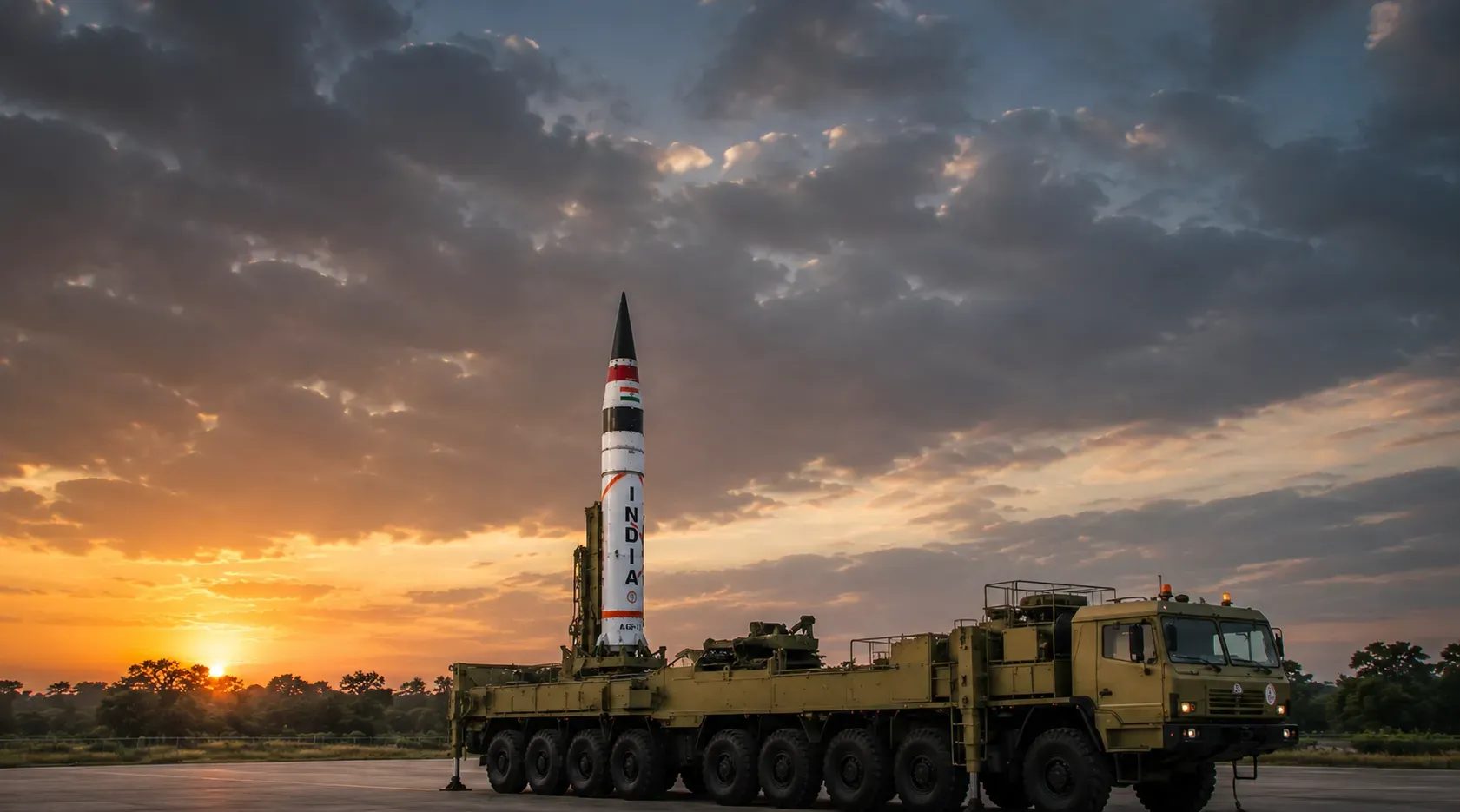
DRDO flagship missile programmes at active trial or induction stages include the Agni-P canisterised medium-range ballistic missile and the Agni-V intercontinental ballistic missile. The cluster also runs the Astra Mk-1 and Mk-2 beyond-visual-range air-to-air missiles.
The Astra Mk-2 has cleared preliminary trials as of April 2026 (DRDO release, April 2026). It is progressing to integrated user trials with the Su-30MKI and the LCA Tejas Mk-1A. The extended-range variant of the Astra Mk-1 is being enhanced to a hundred-and-sixty-kilometre engagement envelope after post-Operation Sindoor feasibility talks between DRDO and the Indian Air Force.
The BrahMos supersonic cruise missile programme, delivered through the joint venture between DRDO and Russia's NPO Mashinostroyenia, sits inside the same cluster. The BrahMos-NG next-generation variant is on track for its inaugural flight trials in late 2026, with Indian Air Force induction slated for 2029 (DRDO Chief statement, 2026). The Pinaka Long Range Guided Rocket completed a sixty-kilometre precision-strike trial on 8 July 2026, extending the artillery-rocket family's engagement envelope (Ministry of Defence, 8 July 2026).
The cluster's architecture pushes design work through the Defence Research and Development Laboratory, the Advanced Systems Laboratory, and the Research Centre Imarat. Bharat Dynamics-integrated production lines and the Integrated Test Range at Balasore handle user-trial evaluation. That end-to-end chain is what allows the cluster to compress the timeline from concept to induction.
The Aeronautical Systems cluster (Aero)
The Aeronautical Systems cluster delivers combat-aircraft technologies, unmanned aerial vehicles, aero gas turbine engines, airborne surveillance platforms, and aerial delivery systems. It owns the design mandate for the whole indigenous aeronautics stack (DRDO, Aeronautical Systems, current).
Its lead laboratories are the Aeronautical Development Establishment at Bengaluru and the Centre for Airborne Systems at Bengaluru. The Gas Turbine Research Establishment sits at Bengaluru, and the Aerial Delivery Research and Development Establishment operates from Agra. The Aeronautical Development Agency at Bengaluru, a societal body under DDR&D, sits alongside the cluster and led the design of the Light Combat Aircraft Tejas.
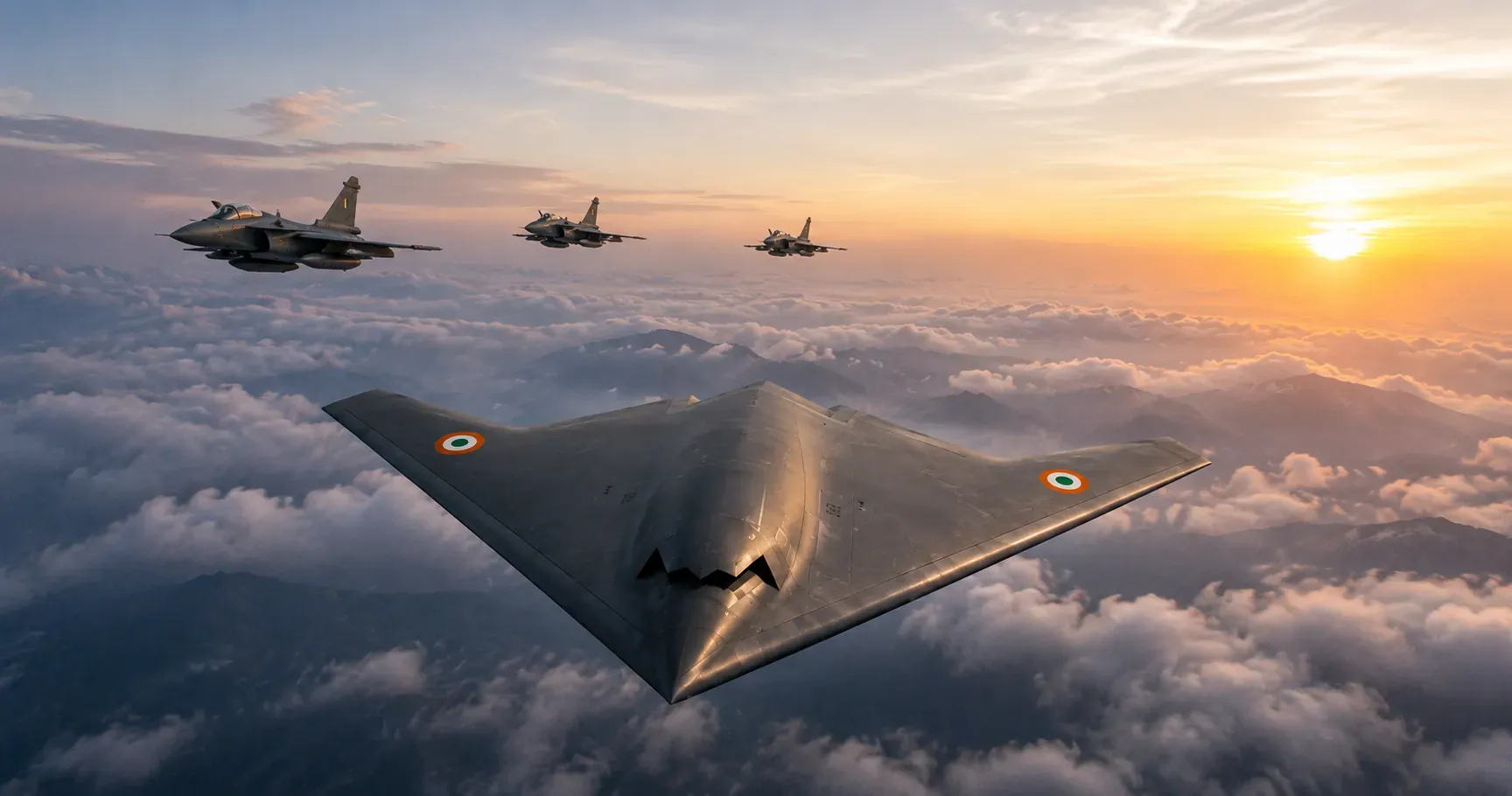
Combat-aircraft expertise built through the Tejas Mk-1 and Mk-1A programme now flows into the Advanced Medium Combat Aircraft. The DRDO Chief confirmed in January 2026 that the LCA Mk-2 first-flight window sits in June to July 2026, keeping the Tejas roadmap on the announced schedule. The AMCA fifth-generation fighter draws its stealth-shaping, propulsion, and materials architecture from the same design lineage the cluster has built across three decades.
The UAV pipeline is the second output the aeronautics cluster manages. The Tapas BH-201 medium-altitude long-endurance UAV, formerly the Rustom-II, is the flagship indigenous MALE platform led by the Aeronautical Development Establishment. Earlier UAV programmes including the Lakshya target drone and the Nishant tactical UAV built the operating expertise the cluster now applies to newer platforms.
The cluster also carries the Aero Gas Turbine Engine mandate through the Gas Turbine Research Establishment. GTRE is running the Kaveri derivative and the successor engine work that would eventually power a follow-on AMCA configuration. The cluster's combined output places it inside every conversation about indigenous combat aviation, unmanned aerial platforms, and Indian propulsion.
The Naval Systems and Materials cluster (NS&M)
The Naval Systems and Materials cluster delivers sonars, torpedoes, mines, underwater sensors, naval weapons, Air Independent Propulsion, and the special-materials work that supports Indian Navy platforms. It groups six laboratories under a Director General based at Visakhapatnam (DRDO, Naval Systems and Materials, current).
The cluster is headed by Naval Physical and Oceanographic Laboratory at Kochi and Naval Science and Technological Laboratory at Visakhapatnam. Naval Materials Research Laboratory at Ambernath and Defence Metallurgical Research Laboratory at Hyderabad sit alongside the two lead labs. Defence Materials and Stores Research and Development Establishment at Kanpur and Defence Laboratory at Jodhpur complete the six-lab set.
Naval Physical and Oceanographic Laboratory runs the sonar and undersea-surveillance programmes for the Indian Navy. Naval Science and Technological Laboratory owns the torpedo programmes including the Varunastra heavy-weight torpedo. Naval Materials Research Laboratory and Defence Metallurgical Research Laboratory supply the special alloys and composites that support the navy's surface ships and submarines.
The cluster also carries the Air Independent Propulsion fuel-cell programme. Research undertaken for the fuel-cell AIP programme is expected to strengthen future conventional submarine projects and enhance India's underwater warfare capabilities (Ministry of Defence, July 2026 statement). The DRDO chairman before the 2026 transition was drawn from this cluster. He had served as Director General Naval Systems and Materials prior to his appointment as Chairman DRDO in August 2022.
The Armament and Combat Engineering cluster (ACE)
The Armament and Combat Engineering Systems cluster delivers armaments, explosives, land-based combat vehicles, and engineering equipment (DRDO, ACE Cluster, current). Its output spans artillery, small arms, tank platforms, and bridging systems that go into every service.
The cluster's seven laboratories start with the Armament Research and Development Establishment at Pune and the Centre for Fire, Explosive and Environment Safety at Delhi. The Combat Vehicles Research and Development Establishment at Chennai and the High Energy Materials Research Laboratory at Pune sit alongside these two. The Proof and Experimental Establishment at Balasore, the Research and Development Establishment (Engineers) at Pune, and the Vehicles Research and Development Establishment at Ahmednagar complete the seven-lab set.
Armament Research and Development Establishment carries the artillery, small-arms, and munitions design work. High Energy Materials Research Laboratory develops the propellants, explosives, and pyrotechnic subsystems that feed the missile and armament programmes. Combat Vehicles Research and Development Establishment led the design of the Arjun Main Battle Tank in the Mk-1 and Mk-1A configurations. The lab continues to run future combat-vehicle programmes.
The cluster's combat-engineering deliverables include the ten-metre and one-hundred-metre short-span bridging systems, the Border Surveillance System, and the DRDO Daksh bomb-disposal robot family. The Pinaka multi-barrel rocket launcher, now extended into the Long Range Guided Rocket configuration, sits at the ACE-MSS boundary and draws on both clusters for propulsion and guidance. The DRDO-organised MSME Defence Expo also transferred technologies for forty-millimetre high-explosive anti-personnel grenades and high-pressure water-mist fire-suppression systems.
The Electronics and Communication Systems cluster (ECS)
The Electronics and Communication Systems cluster delivers radars, electro-optical systems, laser-based sensors, electronic warfare equipment, and communications systems for the three services (DRDO, ECS Cluster, current). Its output feeds every DRDO flagship platform.
The cluster comprises six laboratories plus the Cognitive Technology Lab. Its six labs are Defence Avionics Research Establishment at Bengaluru, Defence Electronics Applications Laboratory at Dehradun, and Defence Electronics Research Laboratory at Hyderabad. Instruments Research and Development Establishment at Dehradun sits alongside these three.
Laser Science and Technology Centre at Delhi and Electronics and Radar Development Establishment at Bengaluru complete the six-lab set. The DRDO Young Scientist Laboratory for Cognitive Technologies at Chennai sits inside the same cluster.
Electronics and Radar Development Establishment at Bengaluru is the lead radar laboratory. It has delivered the Rohini, Revathi, and Uttam active electronically scanned array radars for the armed forces. Defence Avionics Research Establishment supplies the avionics and electronic-warfare subsystems for the LCA Tejas and Su-30MKI platforms. Defence Electronics Research Laboratory at Hyderabad owns the naval-electronic-warfare and communications-intelligence portfolio.
The Centre for Artificial Intelligence and Robotics at Bengaluru sits inside the neighbouring MCC cluster. The centre works with ECS on autonomous vehicles, intelligent decision-support systems, and AI-driven target recognition.
The Akashteer battlefield air-defence command and control system draws its data-fusion architecture from that same cross-cluster interface. The ECS cluster also carries the electronic-warfare payload work that feeds into fighter aircraft, naval platforms, and airborne early-warning systems.
DRDO clusters and their flagship programme portfolios
The seven clusters map cleanly to defined programme portfolios. Reading the cluster-to-programme matrix gives the reader a fast index of which cluster owns which family of deliverables.
DRDO cluster | Major flagship programmes | Technology output |
|---|---|---|
Missiles and Strategic Systems | Agni series, Astra Mk-1 and Mk-2, BrahMos, Pinaka, Akash, Nag, Ballistic Missile Defence, Project Kusha | Ballistic missiles, cruise missiles, air-to-air and surface-to-air missiles, BMD, guided rockets |
Aeronautical Systems | LCA Tejas Mk-1 and Mk-1A, LCA Mk-2, AMCA, Tapas BH-201, Kaveri derivative engine, AEW&C | Combat aircraft, UAVs, aero engines, airborne surveillance |
Naval Systems and Materials | Varunastra torpedo, Air Independent Propulsion, sonar suites for Indian Navy surface and subsurface platforms | Sonars, torpedoes, AIP fuel-cell propulsion, submarine materials |
Armament and Combat Engineering | Arjun Main Battle Tank Mk-1 and Mk-1A, bridging systems, Pinaka MBRL, Daksh bomb-disposal robot | Armoured vehicles, artillery-rocket systems, combat engineering |
Electronics and Communication Systems | Rohini, Revathi, Uttam AESA radars, Akashteer C2, Netra AEW&C avionics, EW payloads | Radars, avionics, electronic warfare, command and control |
Micro Electronic Devices, Computational Systems and Cyber Security | AI decision-support platforms, cryptology for battlefield C2, semiconductor development | AI, cyber security, semiconductors, quantum |
Soldier Support System | High-altitude nutrition and physiology programmes, biomedical devices, CBRN protection systems | Life sciences, food, physiology, CBRN |
The matrix also surfaces the cross-cluster technology cascade that ties current programmes to future ones. Expertise generated through the Tejas programme is being applied to the AMCA project. Technologies developed under the Ballistic Missile Defence programme support Project Kusha.
Research undertaken for the fuel-cell Air Independent Propulsion programme is expected to strengthen future conventional submarine projects (Ministry of Defence, July 2026 statement). Each cascade closes the loop between lab-level research and the next flagship.
Flagship programmes by trial and induction stage
DRDO flagship programmes now cluster into four stages that map to distinct DFP-2026 provisions. Reading the stage grouping gives the sharpest view of what the reform is designed to accelerate.
Development stage | Programmes at this stage | DFP-2026 provision that targets this stage |
|---|---|---|
User trials moving into serial induction | Astra Mk-2 BVRAAM, Pinaka Long Range Guided Rocket, extended-range Astra Mk-1 | Trial-campaign and testing-and-evaluation grants |
Advanced trials with first-flight or first-firing in the current cycle | BrahMos-NG cruise missile, LCA Tejas Mk-2 | Trial-campaign grants and integration budgets |
Design finalisation for delivery in coming budget cycles | AMCA fifth-generation fighter, Project Kusha long-range SAM | Pre-project R&D provisions |
Export delivery under signed government-to-government agreements | Akash SAM, BrahMos cruise missile, loitering munitions, Pinaka | Export licence facilitation through the Ministry of Defence |
India and Indonesia signed a BrahMos-Astra deal earlier in 2026, making Indonesia the first foreign buyer of the Astra Mk-1 beyond-visual-range air-to-air missile. Akash, BrahMos, loitering munitions, and Pinaka have become important components of India's expanding defence export portfolio (Ministry of Defence, July 2026). The frontline benchmark for every one of these programmes is the performance envelope DRDO-developed weapons demonstrated during Operation Sindoor.
How a DRDO programme moves from research to induction
A DRDO programme moves through six stages from concept to armed-forces induction. Each stage has a distinct lead entity, a distinct financial channel, and a distinct set of accountable offices.
The first stage is concept and feasibility. The lead lab in the assigned cluster drafts a technology proposal and secures Chief Controller approval. Extra-Mural Research grants under DFP-2026 fund academic partners at this stage. Defence Innovation Accelerator Centres of Excellence also take on early-stage feasibility work in specific focus domains.
The second stage is design and development. Multiple laboratories inside the cluster and across clusters contribute subsystem work. The Technology Development Fund supports early-stage industry partners during this stage. Pre-project R&D provisions inside DFP-2026 fund parallel design tracks that would earlier have waited for full project sanction.
The third stage is prototype build. The lead lab and its Transfer of Technology industry partner produce integrated prototypes. Defence Public Sector Undertakings like HAL, BEL, BDL, or GRSE take on production-scale build responsibility. The MSME Defence Expo channel identifies additional private-industry partners for subsystem manufacture.
The fourth stage is ground trials. Dedicated test facilities including the Proof and Experimental Establishment at Balasore and the Integrated Test Range at Balasore evaluate the system under controlled conditions. The Interim Test Range at Chandipur also runs missile-launch trials during this stage. Trial-campaign provisions inside DFP-2026 fund this stage.
The fifth stage is user trials with the armed forces. The Army, Navy, or Air Force runs the platform through operational scenarios. Feedback loops back to the lead lab for design iteration. Testing-and-evaluation provisions inside DFP-2026 also fund this stage.
The sixth stage is series induction. The DPSU production line begins delivery to the service, and the ToT-licensed private industry supplies additional volume where authorised. Programmes at this stage also become candidates for export under Cabinet Committee on Security approval.
The DFP-2026 delegation-of-financial-powers reform is designed to compress the timeline across the six stages. Its trial-campaign and testing-and-evaluation provisions target the fourth and fifth stages. Its pre-project R&D provisions target the first and second stages. That is the mechanism by which the reform is expected to accelerate the AMCA, LCA Mk-2, and BrahMos-NG design cycles.
Industry partners, iDEX, and technology transfer channels
DRDO's industry-transfer pipeline runs through three main channels. Transfer of Technology agreements license production of DRDO-designed systems to Indian public and private industries. Extra-Mural Research grants fund academic and startup work on defined defence-technology problems. The Technology Development Fund underwrites early-stage development at MSMEs and startups.
The DRDO-organised MSME Defence Expo handed over twenty-three licensing agreements (Ministry of Defence, MSME Defence Expo release). The agreements covered armaments, laser systems, life sciences, combat vehicles, naval systems, and aeronautics. Nine industry partners received SAMAR assessment certificates at the same event. That marks their competency under the System for Advance Manufacturing Assessment and Rating benchmark.
The events also transferred technologies for LCA Tejas brakes and one-hundred-metre floating infantry bridges. Those transfers show the pipeline running end-to-end from lab research through DPSU integration to MSME production.
The iDEX scheme for defence innovation is a Ministry of Defence programme that funds startups and MSMEs to solve challenges called for by the armed forces. iDEX sits alongside DRDO's industry channels. It complements them by covering domains where the services want a rapid startup-led solution rather than a full DRDO programme. The Defence Innovation Accelerator Centres of Excellence, now separately budgeted under DFP-2026, add a third grant channel for high-risk, high-reward indigenous technology work.
DFP-2026 reform: what to watch over the next twelve months
The DFP-2026 delegation-of-financial-powers framework will be measured by three tests over the next twelve months. The first test is whether the trial-campaign and testing-and-evaluation provisions compress the induction timeline for programmes already at user-trial stage. Those programmes include the Astra Mk-2 and the Pinaka Long Range Guided Rocket.
The second test is whether the pre-project R&D provisions accelerate the design cycles for AMCA, LCA Mk-2, and BrahMos-NG. The third test is whether the segregated grants for Extra-Mural Research, DIA-Centres of Excellence, and Technology Development Fund projects widen the private-industry and academic pipeline.
The Chairman DRDO under whom these tests play out is Defence Secretary Rajesh Kumar Singh, holding additional charge until a permanent appointment is made. His policy background will shape how the DFP-2026 machinery interacts with the parallel defence-procurement reforms delivered through DFPDS-2026 (Ministry of Defence, 29 June 2026). The Sudarshan Chakra directive announced by the Prime Minister at the 68th Foundation Day sits as the strategic delivery frame the organisation must scope through the reform machinery.
The frontline benchmark against which the reforms will be judged is the performance envelope DRDO-developed weapons delivered during Operation Sindoor. Balasya Mulam Vigyanam, the source of strength is science, is now paired with a delegated-financial-powers spine that lets the DRDO organisation structure convert science into induction.
The next twelve months will show how far the seven-cluster, forty-six-lab lattice can compress the gap from cluster deliverable to armed-forces platform. The clearest signal will land at the 69th DRDO Foundation Day address on 1 January 2027.