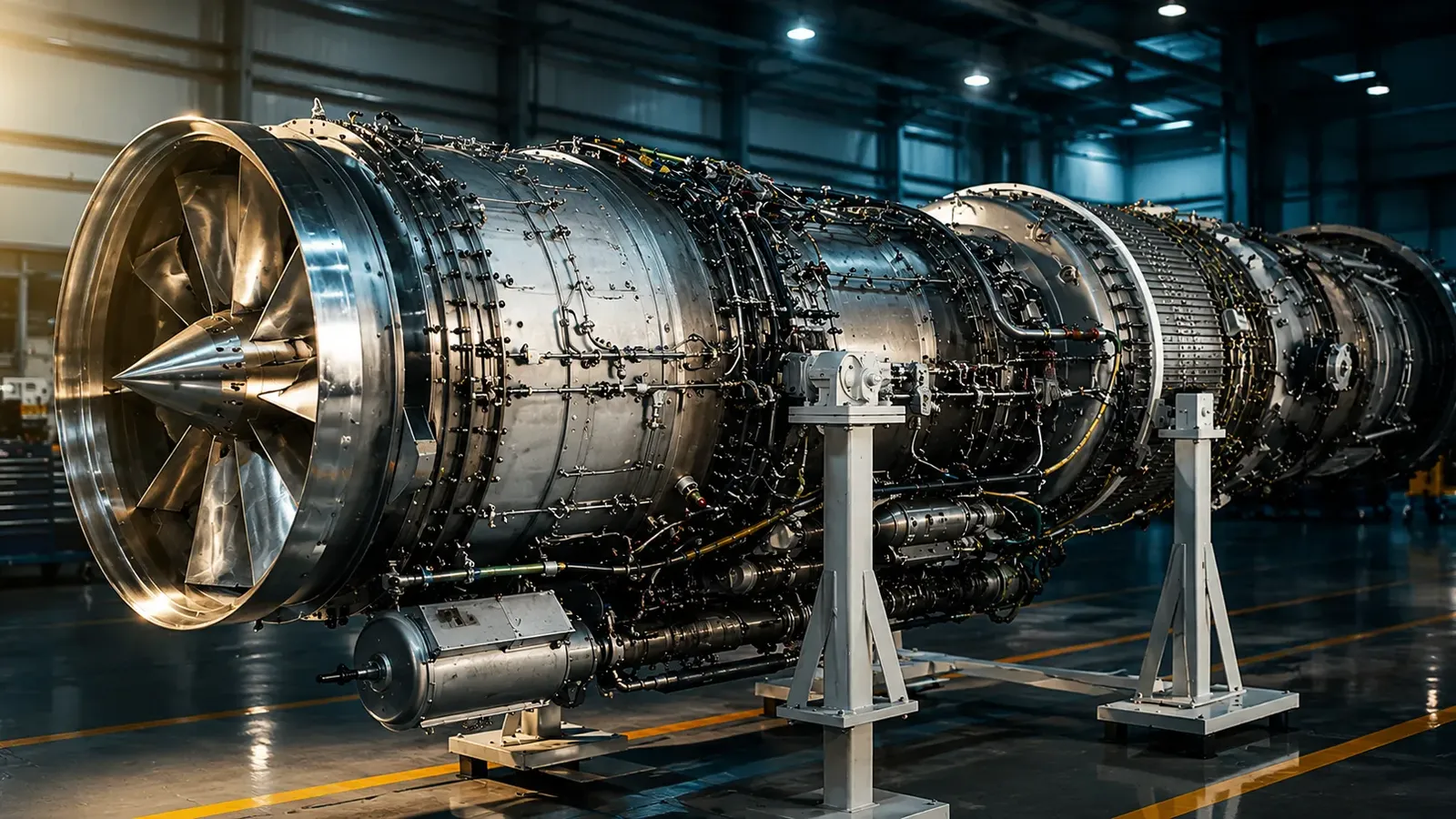
The Kaveri engine is no longer a single fighter-engine project but a three-track propulsion base. The Ministry of Defence reported that the original programme had consumed ₹2,035.56 crore and produced nine full prototypes and four core engines by November 2021. In February 2026, Defence Minister Rajnath Singh witnessed a full afterburner test at GTRE Bengaluru, adding a fresh milestone to a programme that began in 1989. (Press Information Bureau, 29 November 2021; Ministry of Defence, 16 February 2026)
Tracing the Kaveri engine programme arc
The Kaveri engine programme began in March 1989 after sanction from the Cabinet Committee on Security. The Gas Turbine Research Establishment, a Defence Research and Development Organisation laboratory, became the principal organisation responsible for its development. The original objective was direct: create an indigenous turbofan engine for the Light Combat Aircraft programme. (Press Information Bureau, 29 November 2021)
The initial project sanction was ₹382.81 crore, with a December 1996 planned completion date. The development period was later extended and the sanctioned cost was revised to ₹2,839 crore. A parliamentary reply recorded utilisation of ₹1,996 crore at that stage. (Press Information Bureau, undated parliamentary reply)
The scale of that sanction sits well below international benchmarks. General Electric spent over $1 billion developing the F404 turbofan that Tejas eventually adopted. Snecma's M88 for the Rafale reached roughly $1.6 billion, and the Eurojet EJ200 for the Typhoon programme absorbed a comparable figure.
China's WS-10 development received close to $1.4 billion over its first five years. India sanctioned the Kaveri engine DRDO programme at a fraction of those figures and expected comparable performance. (Indian Defence News, 9 April 2026)
By November 2021, the Ministry of Defence reported ₹2,105 crore allocated to the programme and ₹2,035.56 crore spent. The programme had produced nine full prototype engines and four core engines, with 3,217 hours of engine testing completed. Kaveri was not a paper design. (Press Information Bureau, 29 November 2021)
Kaveri was delinked from the Tejas programme in September 2008 after the engine could not meet the aircraft's required performance envelope. That decision changed the programme from a single-platform fighter engine into a technology base that could support other applications. (Multiple defence sources, September 2008)
The lesson was that a fighter engine requires a chain of capabilities beyond the core engine architecture. Turbine materials, high-pressure compressors, combustion, hot-section durability, controls, altitude testing, afterburning and certification must mature together. Kaveri therefore became an industrial learning programme as much as an aircraft engine programme.
Inside GTRE and the Bengaluru engine ecosystem
The Gas Turbine Research Establishment is the central laboratory behind the Kaveri engine lineage. Its work covers the engine core, testing, integration and the engineering knowledge required to move from prototype hardware toward production-standard propulsion.
Kaveri also created a wider industrial network around GTRE, one that has become the spine of India's drone and defence industry base for high-value systems. The programme required specialised manufacturing, test infrastructure, materials knowledge and international test support. The resulting ecosystem now includes public-sector aerospace organisations, private industrial manufacturing capacity and international technical partners.
The production pathway has moved beyond laboratory prototypes. Godrej Aerospace delivered the first production-standard D1 Kaveri unit in September 2025, with D2 and D3 planned for endurance and altitude trials. This transition matters because prototype construction and repeatable production are different engineering problems. (Defence News India, 30 June 2026)
GTRE has expanded domestic test infrastructure. A design and test facility at the HAL Aero Engine Research and Development Centre in Bengaluru can accommodate engines up to 130 kN thrust. Such infrastructure creates capacity for engines beyond the original Kaveri specification and supports the wider propulsion roadmap. (Press Information Bureau, undated)
The international test component was equally important. Kaveri development used the Central Institute of Aviation Motors (CIAM) in Russia for high-altitude testing. Trials included an Ilyushin IL-76 flying test bed at Gromov Flight Research Institute. The arrangement exposed the programme to facilities that India did not possess at the time.
The programme also drew on international technical assistance. A 2006 agreement with Snecma, now part of Safran, provided technical support. Technology restrictions remained a constraint, including access to advanced single-crystal turbine-blade technology after sanctions imposed in the late 1990s. (CUTS Global, undated)
This history explains why the Kaveri story cannot be reduced to engine thrust. The programme built test infrastructure, supplier capability, design knowledge and engineering talent that now support three parallel propulsion tracks.
Understanding the original Kaveri jet engine
The original Kaveri was conceived as a low-bypass afterburning turbofan for a fighter aircraft. Its design had to balance thrust, weight, fuel consumption, compactness, thermal performance and high-altitude operation within a military fighter envelope.
The central engineering challenge was the hot section. A modern fighter engine pushes turbine materials and cooling systems to extreme temperatures while maintaining mechanical life. Turbine blades must tolerate high thermal loads, rotational stress and repeated operating cycles. Manufacturing consistency becomes as important as the underlying design.
Materials development sat at the heart of the constraint. General Electric tested 47 alloy formulations to arrive at the F404's hot-section metallurgy. Kaveri's initial materials budget of $2.2 million supported testing across three formulations.
The May 1998 Pokhran nuclear tests then triggered United States sanctions that cut off access to single-crystal turbine blade technology. Understanding why the Kaveri engine failed to meet Tejas performance requires holding both the funding gap and the sanctions gap in view. (Indian Defence News, 9 April 2026)
Kaveri's development exposed these limits. The engine progressed through extensive ground testing, but its thrust and weight characteristics did not meet the requirements of the Tejas programme. The September 2008 delinking reflected that integration gap rather than the disappearance of the underlying technology base. (Multiple defence sources, September 2008)
Former DRDO Chairman Samir V Kamat has since described the strategic error. "The mistake we made was to develop an engine and platform together," he said. The coupling forced Kaveri and Tejas to a common timeline that neither could meet. (IDRW, 15 October 2024)
Kaveri engine thrust is best understood by generation and configuration rather than by one number. The original fighter engine is not identical to its derivatives. Dry Kaveri, Kaveri 2.0, and the proposed 120 kN Advanced High Thrust Class Engine each carry different specifications.
The Dry Kaveri has demonstrated roughly 49 to 52 kN in ground trials. A full-afterburner test in February 2026 reportedly produced between 81 and 83 kN, showing the value of the afterburner development work. These figures belong to different test configurations and should not be presented as one fixed Kaveri specification. (Zee News, 22 February 2026)
The distinction is important for readers comparing Kaveri engine specifications. Thrust alone does not establish aircraft suitability. The engine must also meet mass, dimensions, fuel consumption, reliability, thermal margins, control-system requirements and certification criteria for its intended aircraft.
Delinking from Tejas changed the programme
The September 2008 delinking from the HAL Tejas Light Combat Aircraft marked the first major change in the Kaveri engine's mission. The original programme had been designed around a manned fighter, but the engine could not deliver the required combination of performance and integration characteristics for Tejas. (Multiple defence sources, September 2008)
The response was to preserve the propulsion technology while changing the aircraft application. GTRE developed the Kaveri Derivative Engine, commonly referred to as the Dry Kaveri, for an unmanned combat aircraft application.
A 2015 parliamentary response recorded the derivative's intended use for an Indian Unmanned Combat Aircraft. It also reported expenditure of ₹2,101 crore on the broader Kaveri effort at that stage. (Rajya Sabha written reply, March 2015)
An unmanned combat aircraft can impose a different propulsion requirement from a manned fighter. The engine does not need to satisfy every requirement of a high-performance manned fighter if the aircraft's mission, speed, altitude and endurance requirements differ.
That is the logic behind the Dry Kaveri track for Ghatak. The objective is not to force the original fighter engine into an aircraft for which it was not optimised. It is to use an existing propulsion lineage where its characteristics fit an unmanned combat aircraft.
The Kaveri engine Tejas story therefore contains an important distinction. Kaveri failing to enter Tejas production does not mean that all Kaveri-derived technology failed. The subsequent Dry Kaveri programme demonstrates how a development programme can change its platform target while preserving engineering investment.
The same approach now appears in Kaveri 2.0. Instead of treating the original Kaveri as a finished product, GTRE is using the programme's accumulated technology and manufacturing base for another fighter-engine development path.
Repurposing Dry Kaveri for Ghatak
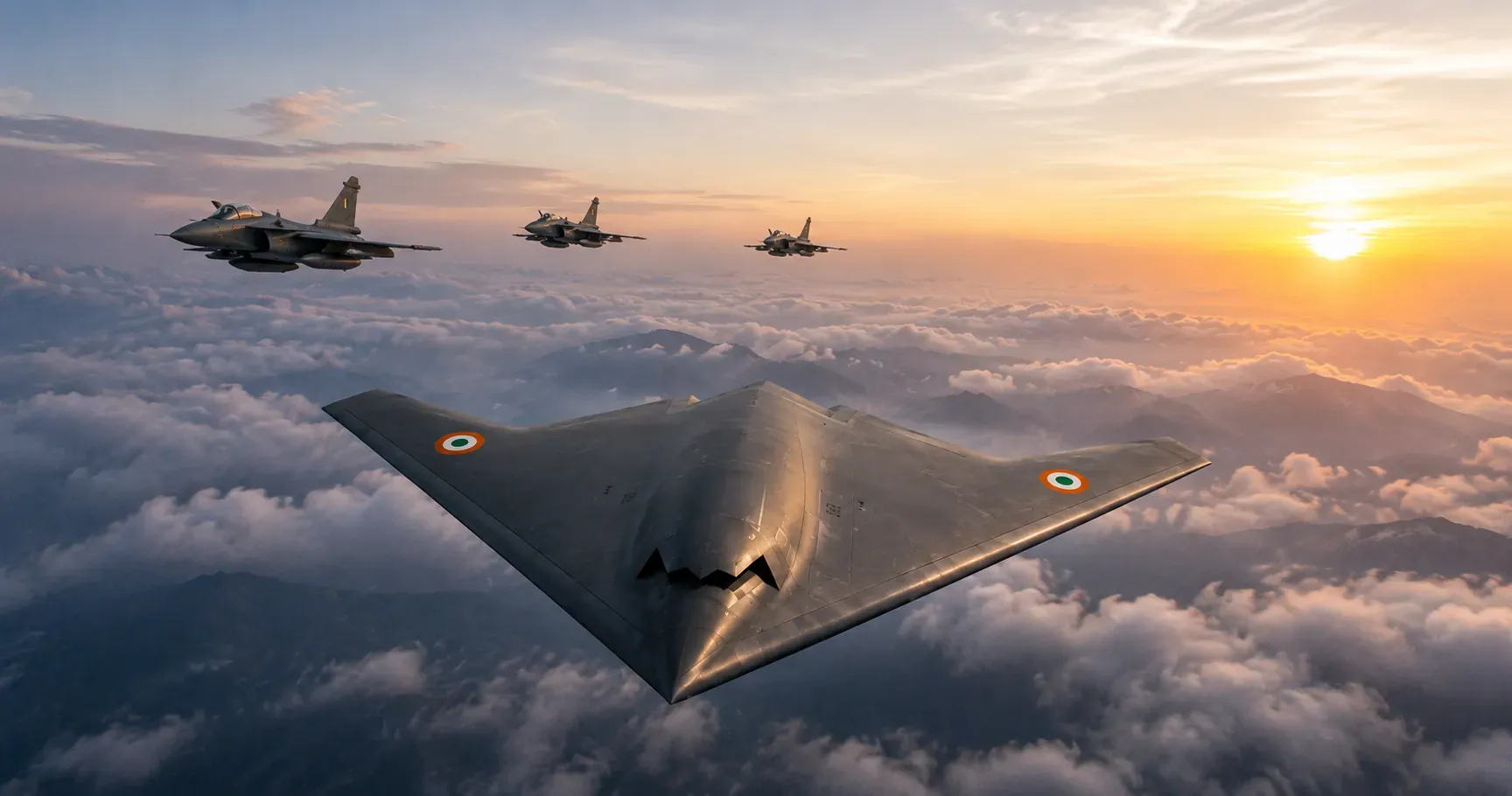
Dry Kaveri is the unmanned-combat-aircraft branch of the Kaveri lineage, drawing on the same design principles that underpin the broader family of loitering munitions in the Indian inventory. The configuration is being developed without the afterburning requirement of a conventional fighter engine. That makes it suitable for the propulsion needs of the Ghatak stealth unmanned combat aerial vehicle.
The February 2026 afterburner test added another data point to the wider Kaveri development story. Defence Minister Rajnath Singh witnessed the full afterburner test at GTRE Bengaluru on 16 February 2026. The afterburner module was developed with BrahMos Aerospace. (Ministry of Defence, 16 February 2026)
That test should not be confused with Dry Kaveri certification. The afterburner demonstration validates a propulsion configuration and subsystem capability. Certification requires a larger body of evidence covering reliability, endurance, operating conditions, controls and aircraft integration.
For Ghatak, the propulsion question also connects directly to autonomy. A stealth unmanned combat aerial vehicle requires mission autonomy, route planning, sensor fusion and onboard computing. Its high-endurance airframe belongs to the same class covered under MALE, HALE and HAPS unmanned platforms. The engine supplies the energy and propulsion layer, while the autonomy stack manages navigation and aircraft control.
This creates a broader design relationship between propulsion and autonomous aircraft. Engine performance influences electrical power generation, thermal management, endurance and mission radius. Those constraints then affect sensor payloads, onboard computing and mission-planning architecture.
The Dry Kaveri track is therefore important beyond the engine itself. It connects indigenous propulsion with an indigenous unmanned combat-aircraft architecture. It also anchors a broader Ghatak UCAV engine roadmap that GTRE plans to iterate through 2030.
Reading the full afterburner test in context
The February 2026 test matters because it demonstrated that the Kaveri lineage continues to support advanced propulsion development nearly four decades after programme sanction. Rajnath Singh witnessed the full afterburner test at GTRE Bengaluru on 16 February 2026. (Ministry of Defence, 16 February 2026)
The reported 81 to 83 kN afterburner thrust range provides a useful reference point for the development path. It does not make the engine an immediate replacement for every foreign fighter engine in Indian service. Thrust is only one part of an aircraft-engine qualification case. (Zee News, 22 February 2026)
The more important signal is the movement from isolated engine tests toward a broader propulsion architecture. The Kaveri programme now has a dry derivative, a fighter-oriented development track and a proposed high-thrust engine programme.
This creates three separate certification and integration problems. Each track has a different aircraft, thrust requirement, test programme and industrial pathway.
The February test also demonstrates the role of domestic subsystem development. BrahMos Aerospace and the supersonic cruise missile lineage fed directly into the Kaveri engine full afterburner test through the afterburner module. It shows how specialised propulsion components can be developed outside the core GTRE laboratory while remaining within an Indian defence-industrial architecture. (Ministry of Defence, 16 February 2026)
For the wider Indian aerospace industry, that distinction matters. Indigenous propulsion does not require every component to originate in one laboratory. It requires domestic organisations to own, integrate and qualify the technologies that form the propulsion system.
Building Kaveri 2.0 for fighter applications
Kaveri 2.0 is the fighter-oriented branch of the programme's revival. The objective is to move beyond the original Kaveri's performance envelope and develop a higher-thrust configuration for a future fighter application.
The current target is around 90 kN for a Tejas Mk1A mid-life retrofit concept. The planned development path includes flight testing on a Limited Series Production Tejas Mk1 airframe around 2030, according to reporting on the programme. A separate 84 to 85 kN afterburner configuration is also under development. (OpIndia, 10 July 2026)
This track differs from Dry Kaveri because the aircraft requirement is different. A manned fighter demands a propulsion system capable of supporting acceleration, sustained flight, high-altitude operation and afterburning within strict aircraft integration limits.
Kaveri 2.0 also depends on production maturity. The delivery of production-standard D1, D2 and D3 units provides an important bridge between development hardware and a repeatable manufacturing process. (Defence News India, 30 June 2026)
The programme's value therefore extends beyond a single engine installation. A successful Kaveri 2.0 pathway would give India additional experience in designing, manufacturing, testing and certifying a domestic fighter engine. It would deepen the indigenous jet engine India capability across manned and unmanned platforms.
The Tejas application also shows why the original Kaveri cannot simply be renamed and reused. Kaveri 2.0 is a separate development effort with different performance targets and integration requirements.
The planned timeline remains a development roadmap, not an operational service date. Flight testing, endurance trials, aircraft integration and certification will determine whether the engine reaches its intended fighter application.
Sending the marine gas turbine to sea
The Kaveri lineage also produced a marine propulsion branch. In July 2008, the Kaveri Marine Gas Turbine demonstrated 12 MW output under test conditions at the Naval Dockyard in Visakhapatnam. Prime Minister Manmohan Singh witnessed the demonstration. (Press Information Bureau, 2008)
The marine application shows how core gas-turbine technology can move between domains. A marine gas turbine does not require the same aircraft integration characteristics as a fighter engine. It must instead meet naval requirements for power generation, reliability, packaging and shipboard operation.
The KMGT therefore represents a separate application of the propulsion knowledge accumulated through the programme. It also demonstrates the strategic value of retaining indigenous gas-turbine expertise even when the aircraft application changes.
Aerospace engines, marine gas turbines and industrial turbines share underlying disciplines in compressors, turbines, combustion, materials and controls. The same principle underwrites the Indian Navy's unmanned surface vessel programme, which depends on domestic marine propulsion for autonomy at sea. Industrial continuity reduces the risk of starting from zero each time a distinct propulsion requirement appears.
Pairing GTRE with Safran for AMCA
The third track moves beyond the original Kaveri engine architecture. The Advanced High Thrust Class Engine programme is positioned around a 120 kN powerplant for the AMCA fifth-generation programme, with GTRE and Safran proposed as partners.
The joint venture proposal was reported as moving toward Cabinet Committee on Security consideration in August 2026. It reportedly includes a $7 billion joint venture, a production commitment of 400 to 600 engines and full intellectual-property ownership by India. (Hindustan Times, 3 August 2026).
The full-IPR structure carries direct precedent. HAL and Safran already operate the Shakti engine collaboration under a Turbomeca-legacy transfer of technology for helicopter propulsion. The model has produced delivered hardware inside Indian assembly lines. The AMCA engine JV extends that pattern to a higher-thrust fighter class. (Public HAL disclosure, 2024)
This track differs from Kaveri 2.0 because it targets a substantially higher thrust class and the requirements of a fifth-generation combat aircraft. The objective is not simply to increase the thrust of the original Kaveri. It is a clean-sheet engine development path informed by the lessons of the earlier programme.
The AMCA engine bay was designed around the footprint of an existing high-thrust fighter engine. Reporting indicates that the proposed 120 kN engine would require limited airframe modification. (Indian Defence News, 3 June 2026)
For AMCA, propulsion is inseparable from aircraft architecture. A fifth-generation aircraft requires thermal management, electrical generation, low observability considerations, flight-control integration and high-performance power generation. The engine must support those requirements as part of the aircraft system.
A parallel decision runs alongside the JV clearance. In January 2026, GTRE issued an Expression of Interest for an Indian Development-cum-Production Partner for the Advanced High Thrust Class Engine. The process will determine which Indian industrial partner integrates, manufactures, tests and certifies the engine in India. (Indian Defence News, August 2026)
This third track therefore represents the third stage of India's propulsion strategy. Kaveri created the domestic engineering base. Kaveri derivatives apply that base to different platforms. The AHTCE track combines that accumulated experience with international co-development to reach a higher thrust class.
The pending CCS decision is consequently an industrial decision as much as an aircraft decision. Its outcome will determine the structure of India's next major fighter-engine development pathway.
Mapping the industrial base behind three propulsion tracks
The Kaveri engine programme now sits inside a wider propulsion ecosystem framed by Make in India drone manufacturing and the government's broader defence-industrial policy. GTRE remains the principal design and development laboratory, while HAL provides aircraft and aerospace infrastructure, industrial partners contribute manufacturing capacity, and specialised organisations contribute subsystems and test capability.
BrahMos Aerospace contributed the afterburner module used in the February 2026 demonstration. Godrej Aerospace delivered production-standard Kaveri hardware. HAL's Aero Engine Research and Development Centre has added test infrastructure capable of accommodating engines up to 130 kN. (Ministry of Defence, 16 February 2026; Defence News India, 30 June 2026; Press Information Bureau, undated)
The ecosystem matters because engine development cannot scale through laboratory work alone. Production requires qualified suppliers, precision manufacturing, inspection, material control, test equipment and repeatable processes. This is why the propulsion base sits at the centre of building a self-reliant Indian drone industry, because every downstream unmanned platform ultimately depends on domestic powerplant capacity.
Propulsion also sits inside the autonomous-system stack for unmanned combat aircraft. A combat UAS combines propulsion, flight controls, communications, sensors, mission computers and software. Predictable power, endurance and thermal margins are what let the autonomy stack function at all.
The Kaveri ecosystem also shows the value of domestic test infrastructure. High-altitude testing, endurance testing and flying test-bed validation allow an engine to move through progressively harder qualification environments. The strategic asset is a domestic capability to design, test, manufacture and certify gas-turbine propulsion for multiple platforms.
What certification means for the next decade
The next phase of the Kaveri engine story will be defined by certification rather than demonstrations. Engine tests establish technical performance. Certification establishes whether the system can support an aircraft programme under defined operating conditions. Both gates route through CEMILAC, the Centre for Military Airworthiness and Certification, which holds sign-off authority for indigenous military aero-engines.
Dry Kaveri faces a 2026 certification target tied to the Ghatak programme. Kaveri 2.0 faces further development and flight-test milestones. The proposed 120 kN AHTCE track faces a government decision on the joint-venture industrial structure. (Defence News India, January 2026; OpIndia, 10 July 2026; Hindustan Times, 3 August 2026)
These are different gates. Dry Kaveri must prove suitability for its unmanned combat-aircraft application. Kaveri 2.0 must prove the performance and reliability required for a fighter retrofit. AHTCE must establish a development and production pathway for a 120 kN next-generation combat-aircraft engine.
The Kaveri engine 2026 certification question is therefore narrower than headlines suggest. Certification of one derivative does not certify the entire Kaveri lineage. Each engine configuration requires its own evidence and integration pathway.
The industrial base will also determine the pace of progress. Production-standard hardware, domestic test infrastructure and qualified suppliers reduce dependence on one laboratory or one external facility. That capacity is exactly what the iDEX innovation scheme and adjacent defence-industrial policy have been designed to fund at the component and subsystem tier.
The February 2026 afterburner test provides a visible milestone. The more consequential milestones will come from endurance, altitude testing, aircraft integration and production decisions.
The Kaveri programme started as one attempt to power Tejas. It now spans unmanned combat aircraft, a fighter retrofit, a marine gas turbine and a proposed 120 kN engine for AMCA. The next inflection points are the Dry Kaveri certification decision, Kaveri 2.0 flight-test authorisation, and the Cabinet Committee on Security decision on the AHTCE engine pathway.