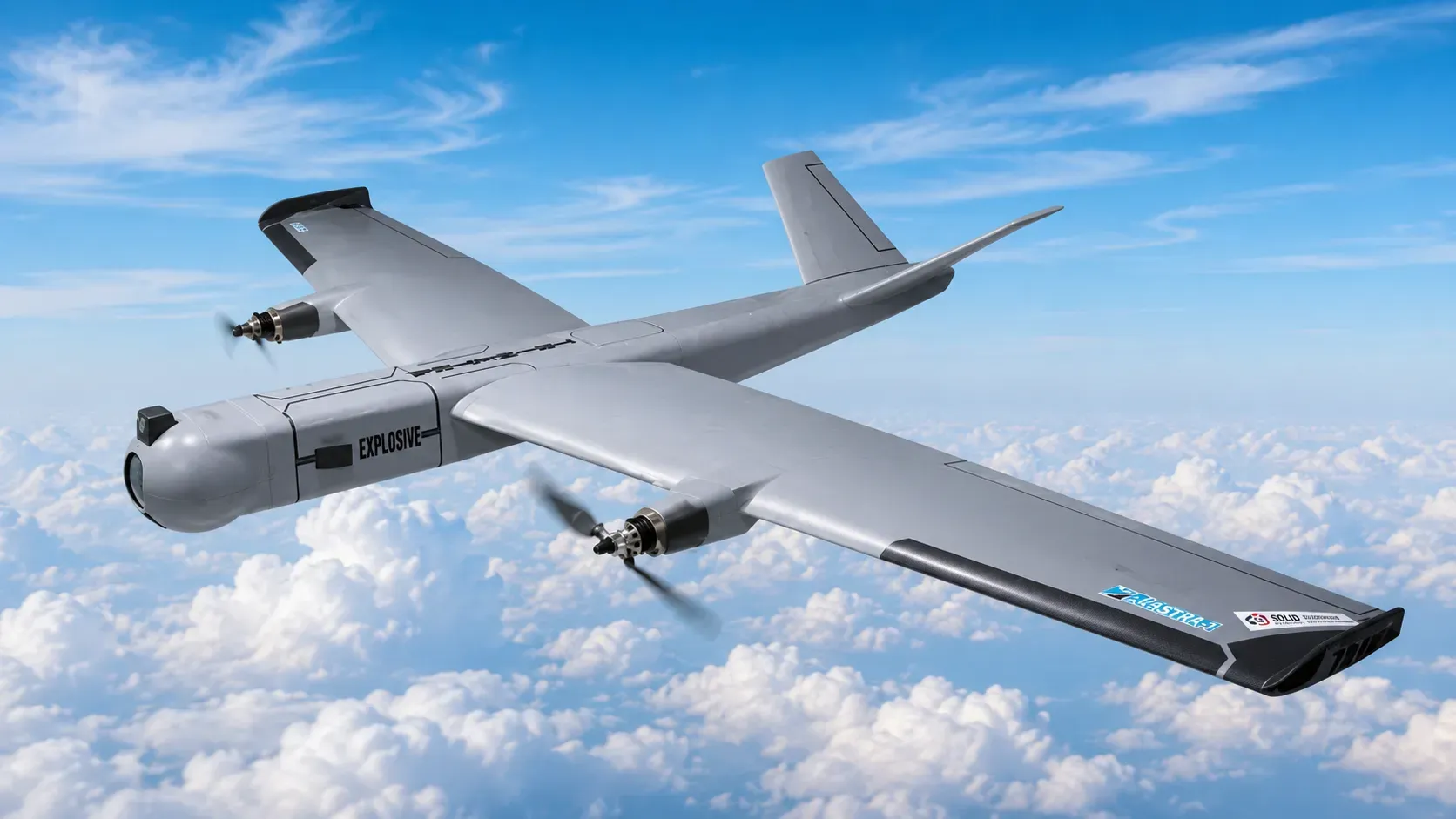
Chief of the Army Staff General Upendra Dwivedi announced the Bhairav drone force at the 26th Kargil Vijay Diwas at Drass on 26 July 2025 (Ministry of Defence, 26 July 2025). The restructuring spans four tiers: Rudra brigades, Bhairav battalions, organic drone platoons in every infantry battalion, and Shaktibaan regiments with Divyastra batteries. The architecture maps cleanly to the doctrinal lineage from Ghatak platoons and to the procurement signal flowing toward indigenous drone, counter-drone, and loitering munition systems. The 25-battalion raise is expected to complete in the months ahead (The Tribune, 2 February 2026).
Bhairav Battalion Structure and Organisation
The Bhairav drone force entered public view on 26 July 2025, but the underlying battalion design had taken shape across months of staff work inside Army Headquarters. The first five battalions were already in formation by the time the Drass war memorial speech landed (Indian Army Southern Command briefing, 4 January 2026). The unit pattern departs from the standard 800-strong infantry battalion structure.
The Bhairav light commando battalion size strength settles at approximately 250 personnel per unit. Each battalion draws specialists from infantry, artillery, air defence, signals, engineers, and logistics branches under a single command (ADGPI Indian Army, 4 January 2026). The structure reads as a self-contained multi-arm team rather than a single-trade formation, summarised below across five capability areas.
Capability area | Function |
|---|---|
Infantry elements | Ground manoeuvre and assault |
Drone operators | Reconnaissance and targeting |
Signals teams | Secure communications |
Air defence detachments | Counter-UAS protection |
Fire support teams | Precision strike coordination |
The Indian Army 25 Bhairav battalions plan extends the structure across both the northern and western theatres (The Tribune, 2 February 2026). Five battalions reached operational status by the end of 2025, and the remaining cohort is expected to complete the raise within the next six months. As additional battalions stand up, brigade and division commanders gain organic access to reconnaissance, strike, and counter-drone capability without waiting for higher-echelon assets.
Bhairav also differs from existing special operations formations. Para Special Forces remain strategic-tier assets reserved for the highest-risk missions, while the Bhairav battalion delivers tactical and operational-depth missions at a lower threshold. That distinction explains the choice to scale the design across multiple formations rather than keep it inside an elite cadre. The operator-level reality sits adjacent to this restructuring and is covered in Indian Army FPV drone doctrine.
Bhairav and the Evolution of Ghatak Platoons
The Bhairav concept did not appear without precedent. Its roots run through nearly a decade of experimentation inside infantry battalions and specialist assault formations. Ghatak platoons historically gave each infantry battalion a small assault team trained for reconnaissance, raids, and high-risk missions inside contested ground.
Battlefield reality has shifted since the original Ghatak design. Information dominance now sits next to physical manoeuvre at the same priority tier. The ghatak platoon Bhairav restructuring reflects that shift in priority. Commanders no longer rely solely on human reconnaissance teams when aerial sensors and loitering payloads can deliver the same effect with less risk (The Print, 11 August 2025).
The Bhairav battalion sons of the soil recruitment principle anchors the doctrinal shift in a regional approach to manning. The 2 Bhairav, popularly known as the Desert Falcons, draws the bulk of its personnel from Rajasthan and operates in the western desert sector under Southern Command (ADGPI Indian Army, 4 January 2026). Local language, terrain familiarity, and climatic adaptation matter as much as technical proficiency in a unit asked to operate at battalion depth inside contested ground.
Operation Sindoor reinforced the value of compressing sensor-to-shooter timelines (Ministry of Defence, 26 July 2025). When reconnaissance data moves directly from a tactical drone operator to a battalion commander, the decision cycle shrinks. The Bhairav restructuring institutionalises that advantage inside the order of battle rather than treating it as an ad hoc capability. The result reads as an evolution of an existing structure, not a clean break from earlier doctrine.
Indian Army’s Four-Tier Drone Warfare Structure
The Bhairav drone force becomes legible only when read against the wider indian army drone restructuring announced from Drass. At the top of the architecture sits the Rudra brigade. Each Rudra brigade combines infantry, armour, artillery, air defence, signals, and electronic warfare elements under a more integrated command than the historical division structure (Observer Research Foundation, 29 October 2025).
Beneath the Rudra brigade operates the Bhairav battalion. Each Bhairav battalion provides drone-enabled tactical manoeuvre and acts as the brigade's offensive executor in contested ground. The two tiers form a tight pairing: Rudra carries the integrated combined-arms role, Bhairav carries the offensive light-commando role. Sitting inside that brigade structure brings the connective tissue that India's defence drone landscape has been pointing toward across recent years.
The third tier embeds the drone platoon indian army concept across every infantry battalion. The Army has labelled these the Ashni platoons. Each Ashni platoon places organic reconnaissance and targeting capability inside the parent battalion. The commanding officer gains direct sensor reach without waiting for divisional or corps-level allocation.
The fourth tier modernises the artillery arm. The Shaktibaan artillery regiment is structured around drone-enabled fires, counter-drone protection, and the Divyastra battery construct (Ministry of Defence, 26 July 2025). Divyastra batteries integrate traditional guns with loitering munitions and surveillance drones into a unified "see-and-strike" loop. The table below summarises the four tiers in compressed form.
Tier | Formation | Primary role |
|---|---|---|
1 | Rudra brigade | Integrated combined-arms operations |
2 | Bhairav battalion | Drone-enabled tactical manoeuvre |
3 | Ashni drone platoon | Organic reconnaissance and targeting |
4 | Shaktibaan regiment with Divyastra battery | Precision fires and counter-drone operations |
The Army's one lakh drone operatives target sits across this architecture rather than inside a single unit. Senior leadership has discussed the figure as a force-wide capability rather than a specialist concentration. The manned-unmanned teaming discipline becomes the connecting concept across the four tiers.
Drones and Unmanned Systems Inside Bhairav Battalions
Doctrine without equipment moves nowhere. The Bhairav design depends on a payload mix that fits inside a 250-personnel formation and operates without dedicated airbase support.
The bhairav battalion organic loitering munitions thread connects loitering payloads directly to the Divyastra battery support behind them. A Bhairav team can mark and strike a target with its own loitering payload or call on the Shaktibaan regiment for heavier fires. The category logic is covered in kamikaze and loitering munition systems.
Reconnaissance UAVs handle persistent observation. Counter-drone systems protect formations from hostile unmanned platforms, drawing on the technical foundation that anti-drone systems in India maps in detail. Secure communications networks tie the operator to the commander, the commander to the brigade, and the brigade to the joint command.
The architecture also connects to the wider air defence layer through the Akashteer air defence network. The Bhairav battalion sits below that layer, drawing protection from it and feeding sensor data upward into the same joint picture.
Sensor data flows through the network into the joint operating picture. The Bhairav battalion contributes ISR feed from its organic drones to the same network and consumes counter-drone alerts coming downward.
Future integration may absorb drone swarms and swarm intelligence once command-and-control systems mature for distributed autonomous operations. This modular design lets the Bhairav battalion absorb additional unmanned capabilities without another organisational restructuring.
The payload mix also tells the procurement story in miniature. Each Bhairav battalion carries a recurring requirement for reconnaissance platforms, loitering payloads, counter-UAS coverage, secure radios, and the training infrastructure that keeps operators current.
Trishul Exercise and Bhairav Combat Readiness
Exercises tell the truth about doctrine. Tri-Services Exercise Trishul, conducted between 3 and 13 November 2025, served as the first large-scale validation of the restructuring framework (Press Information Bureau, 14 November 2025). The exercise integrated land, air, and maritime assets with drone and counter-drone operations under joint command.
Inside Trishul, the Akhand Prahar sub-exercise tested the Bhairav battalion construct in the Jaisalmer sector (Indian Army Southern Command, 13 November 2025). The Battle Axe Division and the 4th Independent Armoured Brigade under XII Corps validated combined-arms operations in a drone-saturated desert environment. Lt Gen Dhiraj Seth, Southern Army Commander, observed the validation cycle and confirmed operational readiness for the lead Bhairav formations.
Vayu Samanvay-II preceded Trishul by a fortnight. The Southern Command conducted the drone and counter-drone exercise on 28 and 29 October 2025 in forward areas of the desert sector (Press Information Bureau, 29 October 2025). The exercise focused on multi-domain command and control fusion inside an electronic-warfare-contested operational environment.
The bhairav battalion republic day parade appearance on 26 January 2026 at Kartavya Path followed the Army Day parade in Jaipur on 15 January 2026. The Fourth Bhairav Battalion, affiliated to the Sikh Light Infantry, took the public-facing role at Republic Day. Exercises, not parades, delivered the operational proof points behind those public moments.
For commanders, the validation chain matters because doctrine only becomes capability after repeated stress testing. Equipment performance under operational conditions tends to shape the next round of procurement decisions more reliably than laboratory benchmarks. Trishul and Vayu Samanvay-II both fed directly into that decision loop.
Bhairav Battalions and India’s Indigenous Drone Procurement
The procurement implications run well beyond the Bhairav battalions themselves. Each operational battalion creates a recurring requirement set: reconnaissance UAVs, loitering munitions, counter-drone protection, secure radios, training systems, and maintenance infrastructure. Multiplied across 25 battalions and the connected Rudra brigades and Shaktibaan regiments, the envelope becomes substantial.
The category sprawl matters as much as the unit count. Industry participants working in reconnaissance airframes, loitering payloads, electronic warfare modules, simulation environments, and counter-UAS systems all sit inside the addressable demand. The connection to building a self-reliant drone industry becomes practical rather than theoretical.
The economic logic underwriting the demand is captured in drone versus missile cost asymmetry. A 250-personnel Bhairav battalion can deliver effects that previously required heavier and more expensive systems. The spending mix shifts toward unmanned platforms over time, and Defence Acquisition Procedure cycles will absorb that shift across the next two budget rounds.
iDEX challenges and the Make-II route are the procurement vehicles best positioned to carry the demand. iDEX channels work for smaller and faster Bhairav-relevant systems. Make-II carries the larger reconnaissance and loitering platforms that Bhairav battalions will request at scale. The Shaktibaan regiment side of the architecture will sit closer to traditional capital acquisition routes.
Recurring requirements also matter inside the architecture. Equipment replacement cycles, software updates, operator certification, and capability upgrades keep the demand line live across multiple budget years. The pattern reads as sustained procurement rather than a single one-off acquisition burst.
Bhairav Force and the Indian Army’s Future Drone Warfare Strategy
The Bhairav drone force is one node inside a longer transformation arc that began in 2018. Successive Army Headquarters studies have proposed reshaping ORBAT and Table of Organisation and Equipment. The driving constraint is a battlefield dominated by sensors, drones, and short-cycle precision strike.
The Kargil Vijay Diwas announcement on 26 July 2025 turned that arc into a near-term implementation programme. By mid-2026, five Bhairav battalions are operational, additional units are in formation, and the wider Rudra-Shaktibaan-Divyastra restructuring has reached the validation phase. The transformation is no longer a future-state plan.
What sits ahead is integration depth, not announcement velocity. The next inflection point is the absorption of Bhairav procurement into the Defence Acquisition Procedure cycle. Operational test cases will follow inside the Northern and Southern Commands. Each of those test cases will refine the doctrine that the 26 July 2025 speech sketched.
Defence integrators reading this should treat the next 18 months as a planning window, not a market window. The procurement language will solidify as the remaining battalions reach operational status. Equipment specifications will tighten as Trishul and Vayu Samanvay-II feed lessons back into staff requirements. The window closes once those specifications are notified.
The next phase of India's unmanned warfare transformation will be defined not by announcements, but by how effectively doctrine, procurement, and operational testing converge into fielded capability. The architecture is in place; the implementation work begins now.