Browse all analysis
BVLOS operations in India: corridors, approvals, and the compliance stack
BVLOS operations in India remain the highest-value, lowest-served operational class inside the country's unmanned aviation framework. Six corridors are operational out of approximately 100 planned routes. This article maps the approval pathway, corridor inventory, detect-and-avoid stack, pilot endorsement, and the regulatory direction shaping long-range drone operations across India.
Drones
Geo-fencing and Remote ID for Indian drones in 2026
Geo-fencing drone India compliance now depends on firmware behaviour, Schedule II airworthiness requirements, and operator-side enforcement discipline. Drone Remote ID India policy remains incomplete despite mandatory geo-fencing under Drone Rules 2021. The gap matters more after the retirement of hard-stop commercial geo-fence systems in late 2025.
Drones
Drone penalties and fines in India: schedule, enforcement, and operator response
Drone penalties and fines in India now extend beyond administrative challans into aviation enforcement, privacy liability, and criminal exposure. A single unauthorised flight can trigger parallel action under Drone Rules 2021, the Bharatiya Vayuyan Adhiniyam 2024, and the Digital Personal Data Protection framework. The enforcement process matters as much as the fine itself.
Drones
Drone Insurance in India: The Complete Guide to Costs, Coverage & Civil Drone Bill Liability
Drone insurance is mandatory in India for drones heavier than 250g, including Micro, Small, Medium, and Large categories, under the Drone Rules 2021. Operators must have third-party liability coverage for property damage, injury, or accidents caused during drone operations. Basic third-party insurance plans usually start around ₹4,000 to ₹5,000. Comprehensive drone insurance with wider coverage can cost ₹10,000 or more depending on the drone type and operational risk.
Drones
Make in India drones are reshaping India's defence and aerospace sovereignty
Make in India drones now anchor India's defence preparedness, industrial resilience, and strategic autonomy. After the Drone Rules 2021 reset, the February 2022 import restrictions, the PLI scheme escalation, and Operation Sindoor's combat validation cycle, indigenous drone manufacturing has shifted from policy ambition to sovereign infrastructure.
AI Cybersecurity
Remote Pilot Certificate in India - what it is, who needs one, and how DGCA issues it
A Remote Pilot Certificate (RPC) is mandatory in India for operating drones above 250 grams for commercial use. The certificate is issued by the DGCA after training at an authorized Remote Pilot Training Organization (RPTO). It remains valid for 10 years. Applicants must be between 18 and 65 years old, pass at least the 10th standard, and hold a valid Aadhaar card or passport.
Drones
Top 12 most advanced military drones in 2026: global leaders and India's indigenous fleet
Military drones now shape reconnaissance, precision strike, border surveillance, and electronic warfare across every major conflict theatre. The 2026 battlefield depends on endurance, autonomy, sensor fusion, and layered drone doctrine. This analysis examines the world's most capable military drones and India's expanding indigenous fleet after Operation Sindoor.
Drones
Types of Drones: Classified by Design, Weight, Range, Altitude and Use Case
Drones (UAVs) are mainly classified into four types based on their structure and flight capability. These include multi-rotor drones, fixed-wing drones, single-rotor drones, and hybrid VTOL drones. Multi-rotor drones are the most common and offer stable, agile flight. Fixed-wing drones support long-range and high-endurance missions. Single-rotor drones are used for heavy payload operations. Hybrid VTOL drones combine vertical take-off with efficient forward flight for versatile missions.
Drones
What are FPV drones? How they work, types, and India use cases (2026)
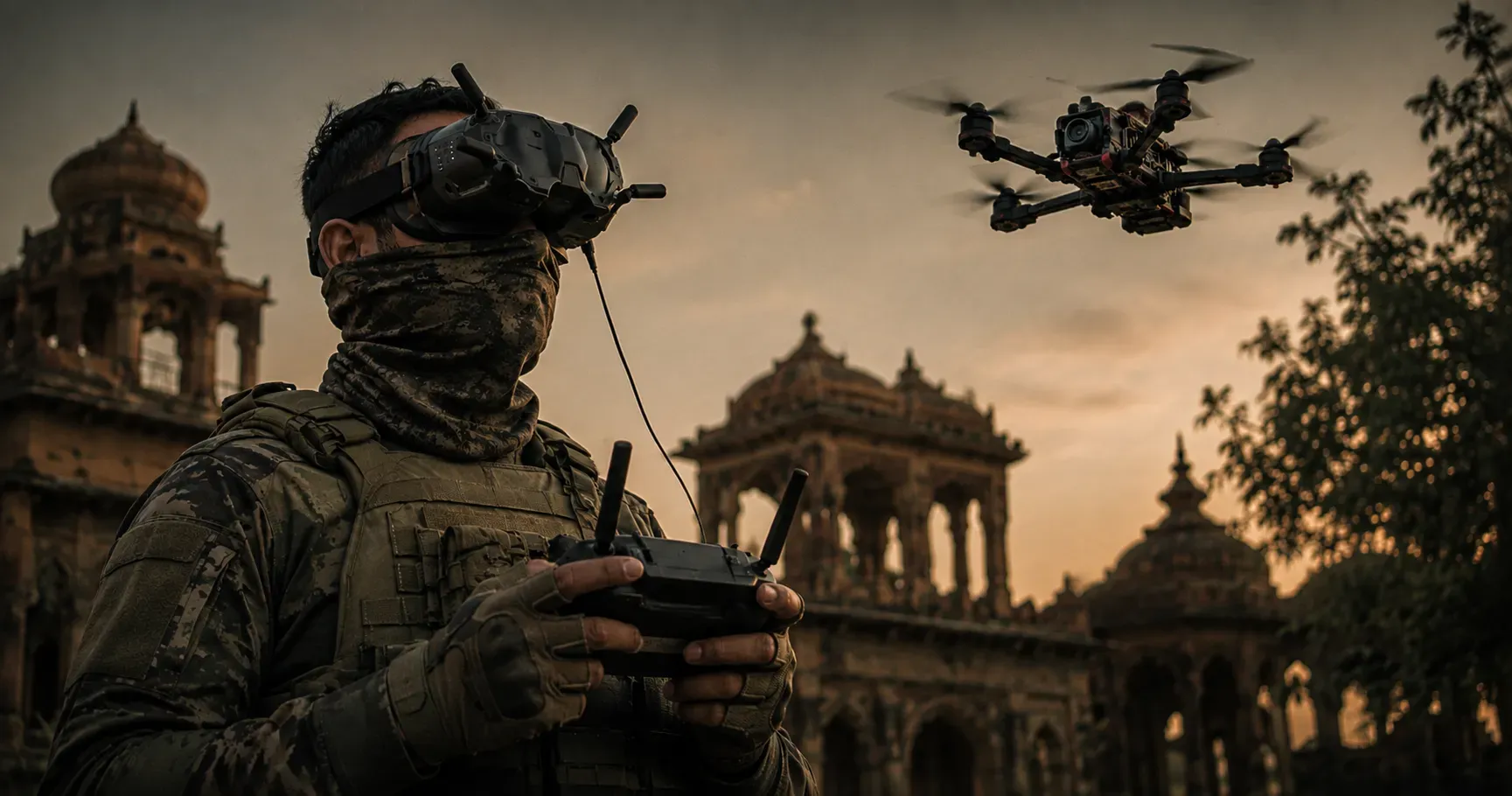
FPV drones moved from hobbyist racing aircraft to frontline combat systems within four years. Their live-video control model, low manufacturing cost, and high manoeuvrability changed how militaries, industrial operators, and civilian pilots use unmanned aircraft. This article explains how FPV drones work, where they are used, and why India's drone ecosystem now treats them as a strategic capability.
Drones
What is Kamikaze Drone and How Does it Work
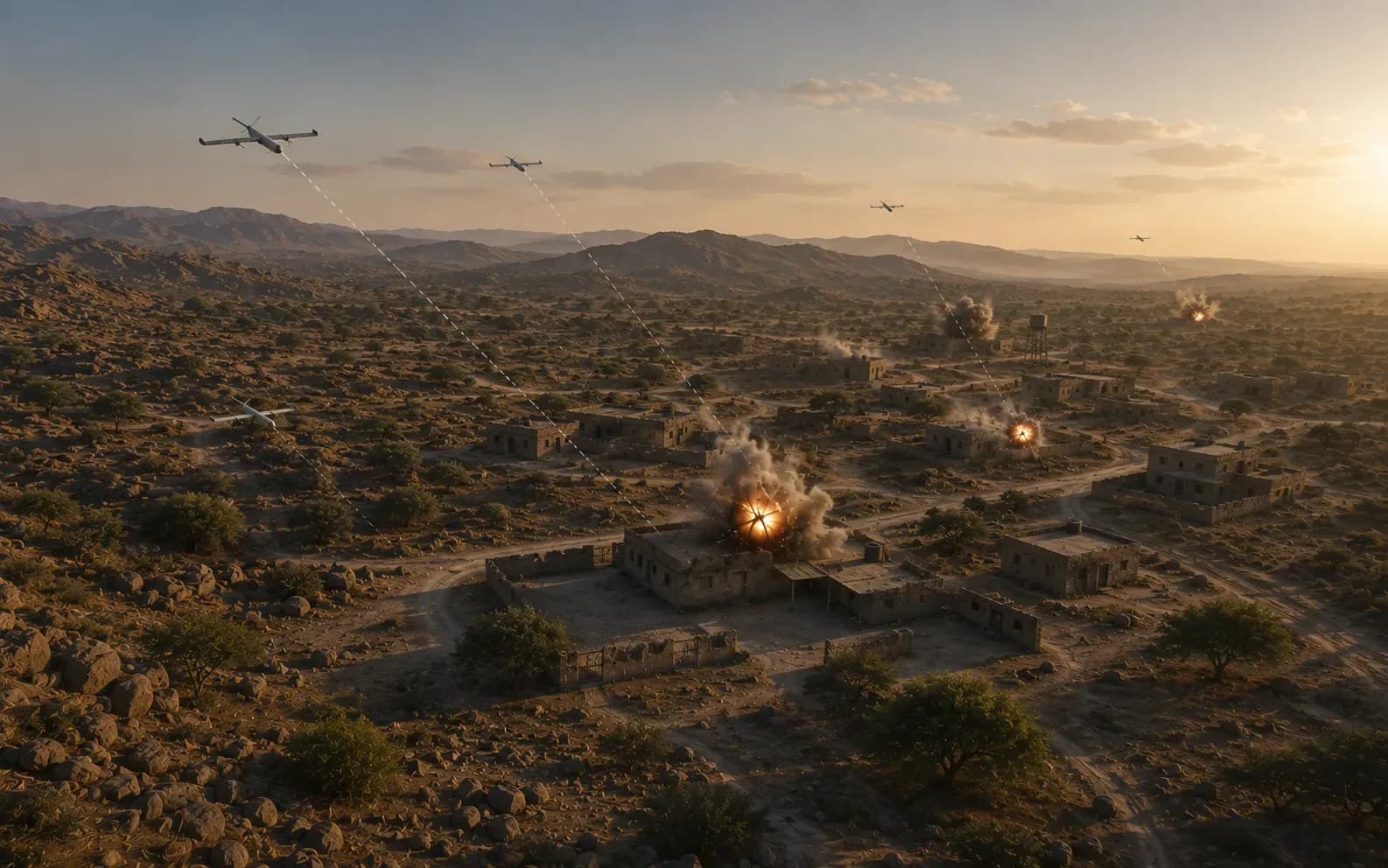
A kamikaze drone, also known as a loitering munition, is a one-way attack unmanned aerial vehicle (UAV). It is designed to locate, track, and destroy targets by crashing into them and detonating an onboard warhead. These drones combine surveillance, target identification, and strike capability in a single system. They are often operated remotely, allowing high-precision attacks at lower cost compared to traditional missile systems.
Drones
NPNT explained: how No Permission No Takeoff locks every Indian drone before takeoff
“No Permission – No Take-off” (NPNT) is a mandatory drone compliance framework in India. It is a software-based system linked to the Digital Sky Platform. Under this rule, all drones except Nano drones must receive valid digital permission before take-off. The system automatically checks flight authorization before allowing the drone to fly. NPNT helps improve airspace safety, compliance, and regulated drone operations in India.
Drones
Inside India's drone type certification framework: how DGCA, QCI and CSUAS work together
Drone type certification in India is a mandatory approval issued by the Directorate General of Civil Aviation (DGCA) through the DigitalSky platform. It ensures drone models meet safety, airworthiness, and quality standards under the Drone Rules, 2021. The certification is required for most drone manufacturers and importers in India. However, Nano drones below 250g and recreational model drones are generally exempt from this requirement.
Drones
How to read India's drone airspace zone map before every flight
India’s drone airspace is divided into three zones: Green, Yellow, and Red - managed via the Digital Sky Platform. Green zones (up to 400 ft) require no permission for sub-500kg drones. Yellow zones (near airports/controlled airspaces) require authorisation, and Red zones are strictly prohibited. ~90% of Indian airspace is open as green zones.
Drones
How India's UTM framework is managing low-altitude drone traffic
India’s Unmanned Traffic Management (UTM) framework is a digital system developed under the Ministry of Civil Aviation to manage drone traffic safely. It mainly covers low-altitude airspace up to 1,000 feet. The framework supports real-time drone tracking, automated flight approvals, and collision avoidance systems. It helps manage the growing use of drones in logistics, surveillance, mapping, agriculture, and other commercial operations across India.
Drones
How to register a drone on eGCA in India: the complete walkthrough
Drone registration in India now begins on the eGCA portal. Since the July 2025 platform split between eGCA and DigitalSky, every operator must complete eGCA drone registration before applying for NPNT-based flight permissions - and most failures happen before the first document is uploaded.
Drones
DigitalSky and NPNT Explained After India's Drone System Split
DigitalSky is India’s official online platform for managing unmanned aircraft system (UAS) operations. NPNT, or No Permission No Take-off, is a mandatory software framework linked to this platform. It prevents drones from taking off without digital approval. The system mainly applies to drones above 250g. It helps improve airspace safety, compliance, and authorized drone operations across India.
Drones
India's drone laws in 2026: registration, penalties, and operator compliance
India’s Drone Rules 2021 and 2022 amendments require UIN registration for drones above 250g. Most non-nano drone operations also need a Remote Pilot Certificate. Operators must get digital approvals through the DigitalSky platform. Key rules include a maximum flight height of 120m (400 ft), restricted no-fly zones near airports and borders, and mandatory direct visual line-of-sight during drone flights.
Drones
Drone Categories in India by Weight: Nano, Micro, Small, Medium & Large
Drones in India are mainly classified by weight, from Nano to Large, and by airframe type such as Multi-rotor, Fixed-wing, and Hybrid VTOL. These drones are widely used in agriculture, surveillance, defence, mapping, and delivery operations. Multi-rotor drones are common for photography and crop spraying. Fixed-wing drones are used for long-range mapping and monitoring. VTOL drones support flexible surveillance and industrial operations.
Drones